Newtown Presbyterian Church

The National Park Service has not published a boundary polygon for this district; the map shows the listed properties inside it and the district's reference point.
Why it's listed
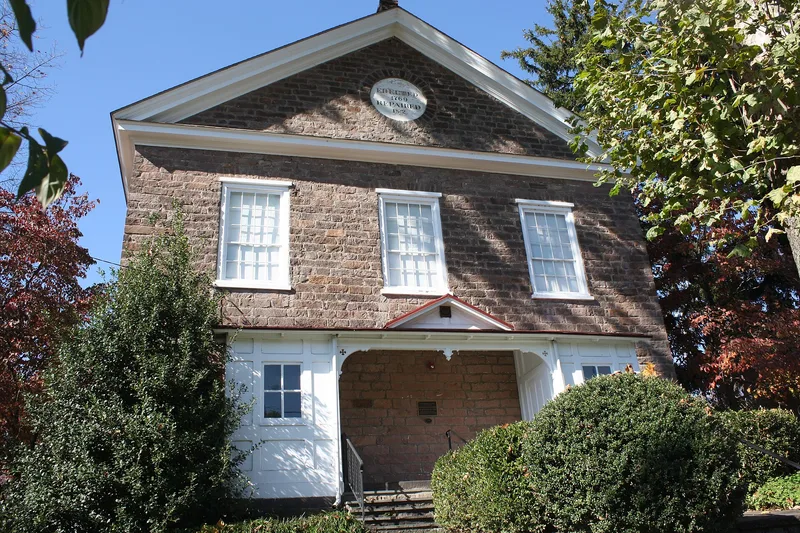
Stone Presbyterian church in Newtown, Bucks County, built in 1769 and remodeled in 1842, with a sessions house from about 1800 and a walled graveyard. The original building was a two-and-a-half-story stone structure by master mason Mathias Hutchinson, who used the floor plan he had earlier applied to the Buckingham Friends meeting house. The 1842 remodeling added a three-sided apse holding a new pulpit, Greek Revival pilasters and entablature, Doric-columned balconies and tall windows, and the building retains good integrity to that date. A Victorian porch and vestibules were added about 1880. The church is regarded as one of the best preserved examples of how Bucks County's earliest non-Quaker Protestant churches were enlarged during the first half of the nineteenth century. Its graveyard holds twenty-two graves of American Revolutionary War soldiers, and the sessions house is one of few pre-Civil War examples of its kind remaining in the county.
Machine-generated summary. This summary was generated by a language model from the official nomination document and has not been reviewed line by line by an editor. It may contain errors. Check the source document before relying on any detail. Source: nomination document (PDF) · catalog entry. Generated October 2026 (model claude-haiku-5-5, prompt v1.1-2026-10-29).
| Period of significance | 1769, 1842, 1880 |
|---|---|
| Styles | Greek Revival |
| Areas of significance | Architecture |
| Acreage | 2.2 |
| Boundary source | not published |
| Full listing page | Newtown Presbyterian Church (property record) |
What listing means for this property
This is a historic district. Buildings within its boundary are either contributing (they add to the district's significance) or non-contributing. Owners of contributing income-producing buildings can claim the 20% federal rehabilitation tax credit; homeowners should look at state credits. National Register districts impose no design review by themselves; a local historic district ordinance, if one exists, does (the difference explained).
General information, not legal or tax advice. Rules change; confirm with your State Historic Preservation Office or a qualified adviser.