Narbrook Park Historic District

Why it's listed
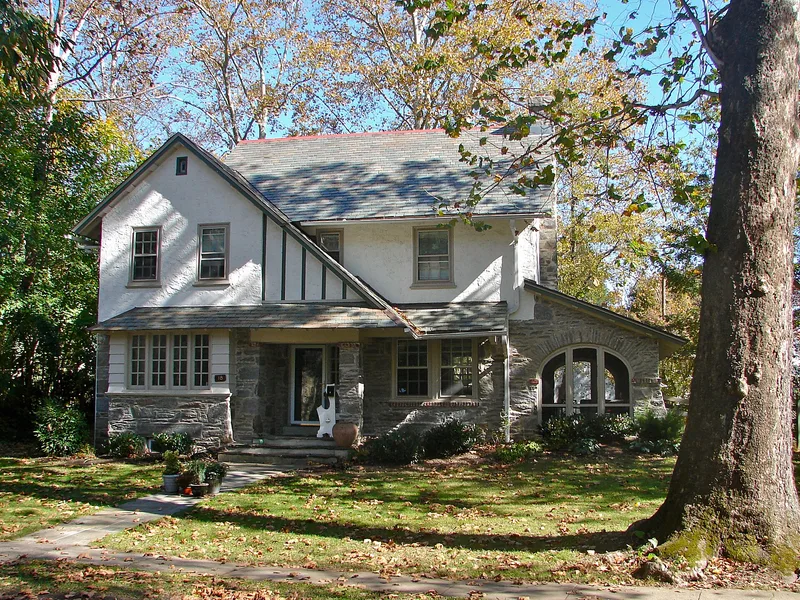
Narbrook Park is a planned residential district of 35 detached houses, 16 garages and about five and a half acres of preserved open space in Narberth Borough, a suburb about six miles from Philadelphia's city hall. Its planning began in early 1914, when a civic association was formed to build a Garden City project financed by the sale of building lots. Landscape architect Robert Anderson Pope laid out the 14-acre tract in 1915, and the district was developed until 1938. Houses are mostly Arts and Crafts and Dutch Colonial Revival in style, with rear service lanes for garages. The layout set garages apart on separate lanes, an early accommodation of the automobile in a suburban neighborhood. The district is regarded as an early American application of Ebenezer Howard's Garden City ideas, blended with Arts and Crafts design, and it reflects the early convergence of city planning and landscape design in this country.
Machine-generated summary. This summary was generated by a language model from the official nomination document and has not been reviewed line by line by an editor. It may contain errors. Check the source document before relying on any detail. Source: nomination document (PDF) · catalog entry. Generated October 2026 (model claude-haiku-5-5, prompt v1.1-2026-10-29).
| Period of significance | 1915-1938 |
|---|---|
| Styles | Arts and Crafts, Colonial Revival |
| Areas of significance | Community Planning and Development, Architecture, Landscape Architecture |
| Acreage | 14 |
| Boundary source | NPS cultural-resource GIS polygon |
| Full listing page | Narbrook Park Historic District (property record) |
What listing means for this property
This is a historic district. Buildings within its boundary are either contributing (they add to the district's significance) or non-contributing. Owners of contributing income-producing buildings can claim the 20% federal rehabilitation tax credit; homeowners should look at state credits. National Register districts impose no design review by themselves; a local historic district ordinance, if one exists, does (the difference explained).
General information, not legal or tax advice. Rules change; confirm with your State Historic Preservation Office or a qualified adviser.