N. Shippen-Tobacco Avenue Historic District

The National Park Service has not published a boundary polygon for this district; the map shows the listed properties inside it and the district's reference point.
Why it's listed
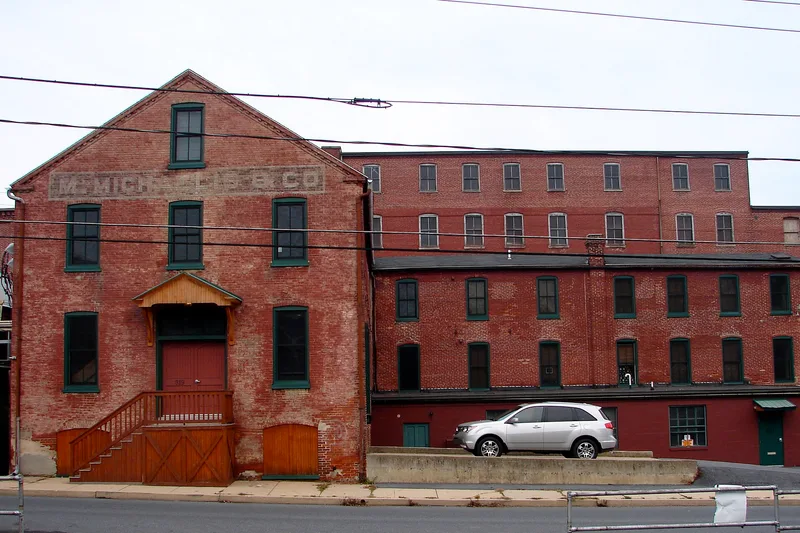
Red brick tobacco warehouses and cigar factories built about 1879 to 1905 line Tobacco Avenue and the blocks around it in Lancaster City. The buildings were erected for the storage and processing of cigar leaf tobacco, a major regional commodity, and they were positioned along a Pennsylvania Railroad right-of-way that carried tobacco and supplies to the district. By 1886 most of the warehouses stood along the avenue, and the A. B. Hess Cigar Factory was added by about 1905. Many buildings were later expanded, raised or combined to meet rising demand, so they show the shift from low end-gabled warehouses with moderately pitched roofs to four- and five-story structures with flat roofs and raised parapets. Their plain brick walls, stone or limestone foundations, high basements and sturdy post-and-beam construction typify Lancaster's industrial architecture. The district is regarded as a well-preserved concentration of tobacco industry resources, and its listing rests on its role in the city's industrial growth and on its representative buildings.
Machine-generated summary. This summary was generated by a language model from the official nomination document and has not been reviewed line by line by an editor. It may contain errors. Check the source document before relying on any detail. Source: nomination document (PDF) · catalog entry. Generated October 2026 (model claude-haiku-5-5, prompt v1.1-2026-10-29).
| Period of significance | C. 1880-1940 |
|---|---|
| Areas of significance | Industry, Architecture |
| Acreage | 1.5 |
| Boundary source | not published |
| Full listing page | N. Shippen-Tobacco Avenue Historic District (property record) |
What listing means for this property
This is a historic district. Buildings within its boundary are either contributing (they add to the district's significance) or non-contributing. Owners of contributing income-producing buildings can claim the 20% federal rehabilitation tax credit; homeowners should look at state credits. National Register districts impose no design review by themselves; a local historic district ordinance, if one exists, does (the difference explained).
General information, not legal or tax advice. Rules change; confirm with your State Historic Preservation Office or a qualified adviser.