Morgantown Historic District

Why it's listed
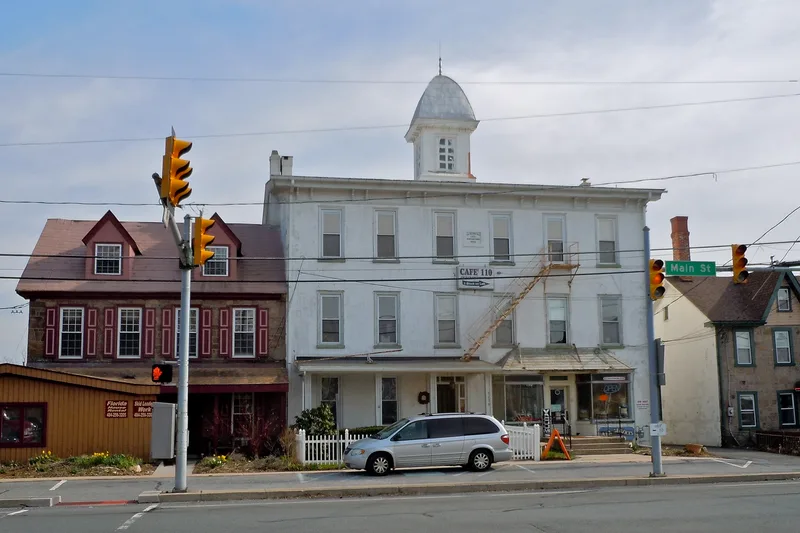
Morgantown is a small village of about nine blocks on State Route 23 at the east end of the Conestoga River Valley in Berks County, surrounded by farmland. Its core around the center square was built from about 1790 to 1850, mostly of brown or red sandstone in the Georgian style, with a few earlier log buildings that survive under later siding or stucco. A second wave of frame Victorian buildings, dating from about 1850 to 1920, flanks the core, and a third group of smaller cast stone, brick and wood buildings from about 1920 to 1945 stands at the east end. The village grew as a commercial hub serving farms and the local iron industry, with a post office established in 1805 and stage routes linking it to nearby towns. Its buildings include a tavern and hotel, a Victorian Italianate lodge and town meeting hall of 1868, and a stone house built by the builder of Reading Furnace Mansion. The district is regarded as having excellent integrity, and its streetscape still retains the look of a 19th-century rural village.
Machine-generated summary. This summary was generated by a language model from the official nomination document and has not been reviewed line by line by an editor. It may contain errors. Check the source document before relying on any detail. Source: nomination document (PDF) · catalog entry. Generated October 2026 (model claude-haiku-5-5, prompt v1.1-2026-10-29).
| Period of significance | ca. 1790-1945 |
|---|---|
| Styles | Georgian, Gothic Revival, Italianate, Queen Anne, Prairie School, Bungalow/Craftsman |
| Areas of significance | Commerce, Architecture |
| Acreage | 21.3 |
| Boundary source | NPS cultural-resource GIS polygon |
| Full listing page | Morgantown Historic District (property record) |
What listing means for this property
This is a historic district. Buildings within its boundary are either contributing (they add to the district's significance) or non-contributing. Owners of contributing income-producing buildings can claim the 20% federal rehabilitation tax credit; homeowners should look at state credits. National Register districts impose no design review by themselves; a local historic district ordinance, if one exists, does (the difference explained).
General information, not legal or tax advice. Rules change; confirm with your State Historic Preservation Office or a qualified adviser.