Millheim Historic District

Why it's listed
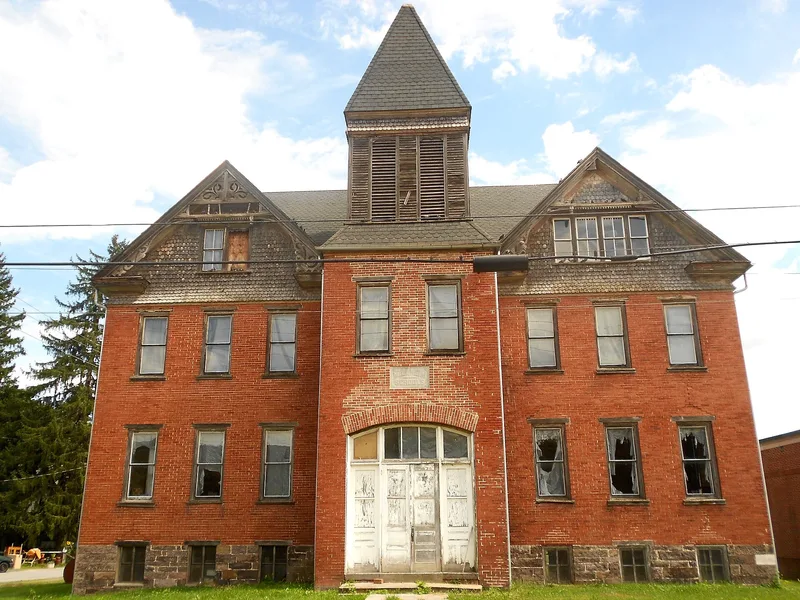
Millheim is a borough in the Penns Valley of eastern Centre County, Pennsylvania, set along Elk Creek where the stream runs out of the Brush Mountain gap. Settlement began with mills on the creek in the late 1700s, and a formal town plan was laid out in 1797 by Michael and Philip Gunkle. The district's mills, including the Elk Mills complex built by James Duncan in 1817, supplied flour and lumber and supported a range of industries through the nineteenth century, among them woolen and hosiery works, tanneries, and a chair factory. The Buffalo and Penns Valley Turnpike, incorporated in 1810, brought westward travelers and commerce. The district holds about 437 buildings, of which 237 contribute to its character. Its houses include simple I types from around 1800 to 1840, Victorianized I houses, gable-end workers' dwellings from 1890 to 1920, and Italianate and Classical Revival commercial blocks. Relatively few modern intrusions remain.
Machine-generated summary. This summary was generated by a language model from the official nomination document and has not been reviewed line by line by an editor. It may contain errors. Check the source document before relying on any detail. Source: nomination document (PDF) · catalog entry. Generated October 2026 (model claude-haiku-5-5, prompt v1.1-2026-10-29).
| Period of significance | 1797-1899 |
|---|---|
| Styles | Vernacular; Victorianized I, Georgian I, Queen Anne, Italianate, Classical Revival, Art Deco |
| Areas of significance | Industry, Transportation, Exploration/Settlement, Architecture |
| Acreage | 127 |
| Boundary source | NPS cultural-resource GIS polygon |
| Full listing page | Millheim Historic District (property record) |
What listing means for this property
This is a historic district. Buildings within its boundary are either contributing (they add to the district's significance) or non-contributing. Owners of contributing income-producing buildings can claim the 20% federal rehabilitation tax credit; homeowners should look at state credits. National Register districts impose no design review by themselves; a local historic district ordinance, if one exists, does (the difference explained).
General information, not legal or tax advice. Rules change; confirm with your State Historic Preservation Office or a qualified adviser.