Lukens Historic District

Why it's listed
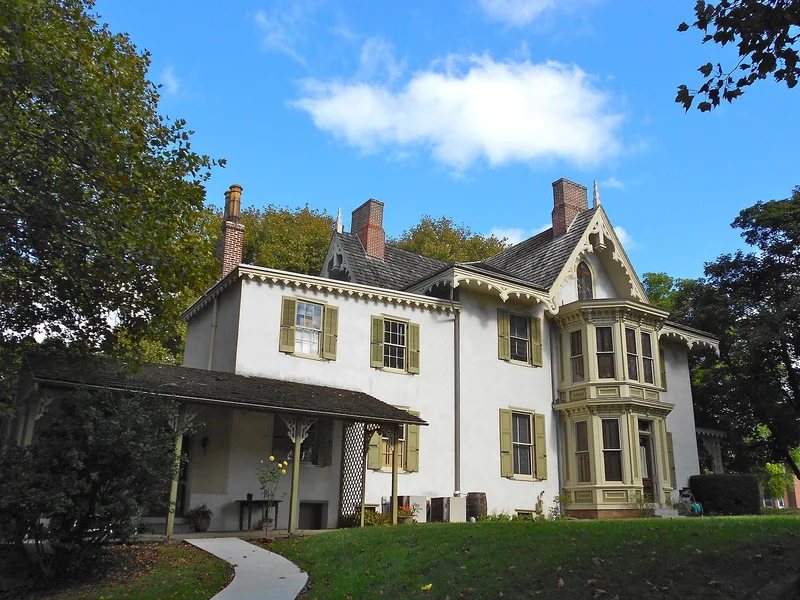
Four buildings on one block of South First Avenue in Coatesville make up this district, centered on the Lukens family and the Brandywine mill. Brandywine, the house Rebecca Lukens lived in from 1816 until her death in 1854, has 18th-century stone and stucco sections and sits beside the rolling mill she managed. Terracina, a Gothic Revival house around 1850, was given by Lukens to her daughter Isabella on her marriage to Dr. Charles Huston. Graystone, commissioned in 1889 by grandson Abram Francis Huston, was designed by Cope and Stewardson, as was the 1902 main office building. The district is significant for Rebecca Lukens's management of the iron works after her husband's death in 1825, at a time when few women headed heavy industry. Her firm supplied boiler plate to markets across the United States and to England, and the houses show the growing prosperity of the company and family over the following decades.
Machine-generated summary. This summary was generated by a language model from the official nomination document and has not been reviewed line by line by an editor. It may contain errors. Check the source document before relying on any detail. Source: nomination document (PDF) · catalog entry. Generated October 2026 (model claude-haiku-5-5, prompt v1.1-2026-10-29).
| Period of significance | 1825-1930 |
|---|---|
| Styles | Brandywine: No Style; Terracina: Late Victorian Gothic; Graystone/Lukens Main Office Building: Late 19th- and 20th-century Revivals, Late Gothic Revival and Colonial Revival |
| Areas of significance | Social History, Commerce, Industry |
| Acreage | 3 |
| Boundary source | NPS cultural-resource GIS polygon |
| Full listing page | Lukens Historic District (property record) |
What listing means for this property
This is a historic district. Buildings within its boundary are either contributing (they add to the district's significance) or non-contributing. Owners of contributing income-producing buildings can claim the 20% federal rehabilitation tax credit; homeowners should look at state credits. National Register districts impose no design review by themselves; a local historic district ordinance, if one exists, does (the difference explained).
Noted as vacant in the nomination. Nomination documents can be decades old; current status may differ. If you are considering buying an empty listed property, read the due-diligence checklist.
General information, not legal or tax advice. Rules change; confirm with your State Historic Preservation Office or a qualified adviser.