Lansdowne Park Historic District

Why it's listed
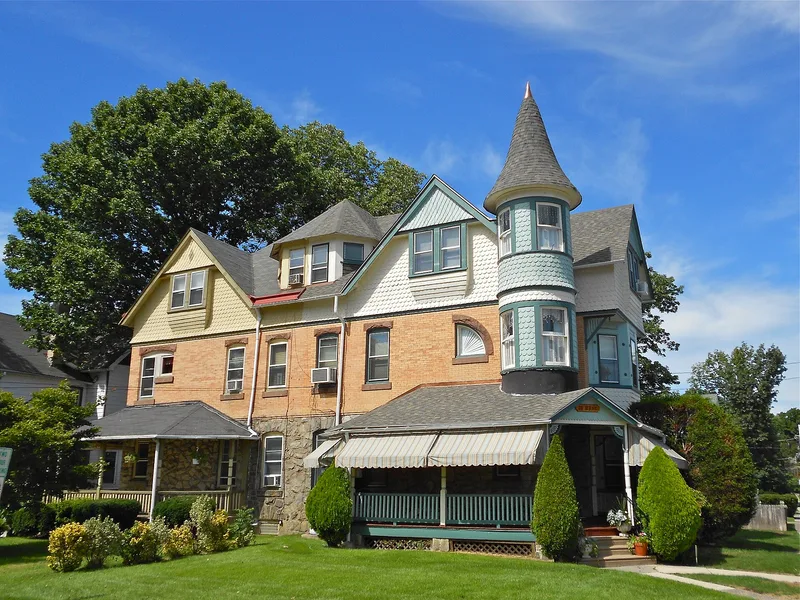
A compact residential district of 106 buildings on about thirty-three acres in Lansdowne borough, developed on farmland that had been worked since the early eighteenth century. The oldest surviving building is the Dickinson farmhouse at 12 Owen Avenue, built in two sections in 1732 and 1790. Most of the district dates from 1889 to 1912, when the Pennsylvania Railroad's improved service made the site attractive to Philadelphia business owners and professionals. Homer C. Stewart and Edward A. Price laid out the lots, and William H. Free designed many of the houses. The result is the largest and most cohesive group of Queen Anne middle-class houses in Delaware County, with twins and singles on uniform setbacks, fishscale gables, turrets, and porches. Eighteen Dutch Colonial houses and examples of Romanesque Revival, Tudor and Shingle styles add variety. Of 106 buildings, 103 contribute to the district's character, and most retain their original form.
Machine-generated summary. This summary was generated by a language model from the official nomination document and has not been reviewed line by line by an editor. It may contain errors. Check the source document before relying on any detail. Source: nomination document (PDF) · catalog entry. Generated October 2026 (model claude-haiku-5-5, prompt v1.1-2026-10-29).
| Period of significance | 1732-1912 |
|---|---|
| Styles | Queen Anne predominant; also Dutch Colonial, Second Empire, Four-Square, Shingle, Romanesque Revival, Tudor and Georgian Revival |
| Areas of significance | Architecture |
| Acreage | 33.3 |
| Boundary source | NPS cultural-resource GIS polygon |
| Full listing page | Lansdowne Park Historic District (property record) |
What listing means for this property
This is a historic district. Buildings within its boundary are either contributing (they add to the district's significance) or non-contributing. Owners of contributing income-producing buildings can claim the 20% federal rehabilitation tax credit; homeowners should look at state credits. National Register districts impose no design review by themselves; a local historic district ordinance, if one exists, does (the difference explained).
General information, not legal or tax advice. Rules change; confirm with your State Historic Preservation Office or a qualified adviser.