Joanna Furnace Complex

Why it's listed
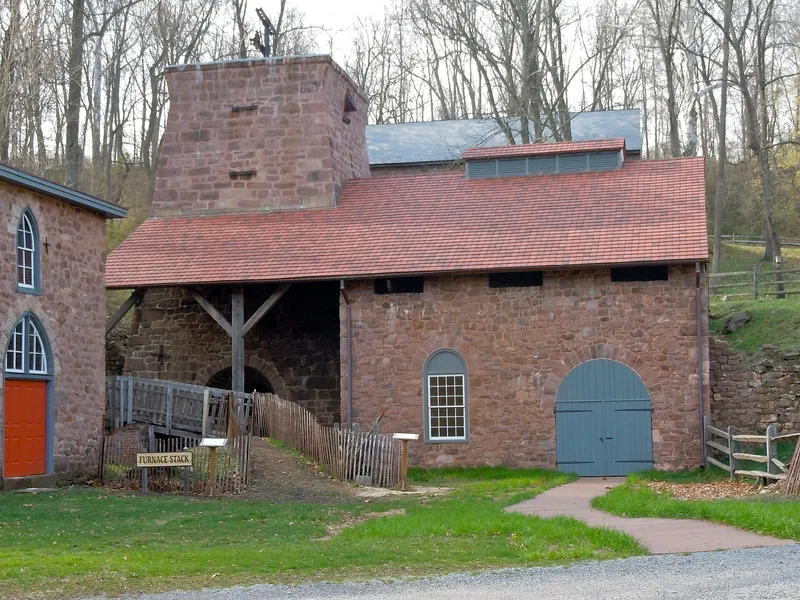
Built in 1792 by Samuel Potts and Thomas Rutter III along Hay Creek in Morgantown, Berks County, Joanna Furnace was an iron-making works that operated under several companies, including Thomas Bull & Co., Darling & Smith Co. and Levi B. Smith & Sons. The furnace was rebuilt in 1847, raised from 28 to 40 feet and, according to the nomination, converted from cold blast to hot blast. Its surviving stack stands 40 feet high from a 28-foot square base, with a huge stone arch at the blowing entrance. Nearby are the blower/engine house, a sandstone building with Gothic-arched openings, and a two-and-a-half-story office and store with a slate gable roof. The complex is significant for its industrial features, which remain largely intact. The furnace is one of the few surviving works erected by the Potts and Rutter families, and it contributed to iron production in Berks County, then a leading center of American iron manufacture.
Machine-generated summary. This summary was generated by a language model from the official nomination document and has not been reviewed line by line by an editor. It may contain errors. Check the source document before relying on any detail. Source: nomination document (PDF) · catalog entry. Generated October 2026 (model claude-haiku-5-5, prompt v1.1-2026-10-29).
| Period of significance | 1700-1899 |
|---|---|
| Areas of significance | Industry, Historic - Non-Aboriginal |
| Acreage | 13.8 |
| Boundary source | NPS cultural-resource GIS polygon |
| Full listing page | Joanna Furnace Complex (property record) |
What listing means for this property
This is a historic district. Buildings within its boundary are either contributing (they add to the district's significance) or non-contributing. Owners of contributing income-producing buildings can claim the 20% federal rehabilitation tax credit; homeowners should look at state credits. National Register districts impose no design review by themselves; a local historic district ordinance, if one exists, does (the difference explained).
General information, not legal or tax advice. Rules change; confirm with your State Historic Preservation Office or a qualified adviser.