Honey Hollow Watershed

Why it's listed
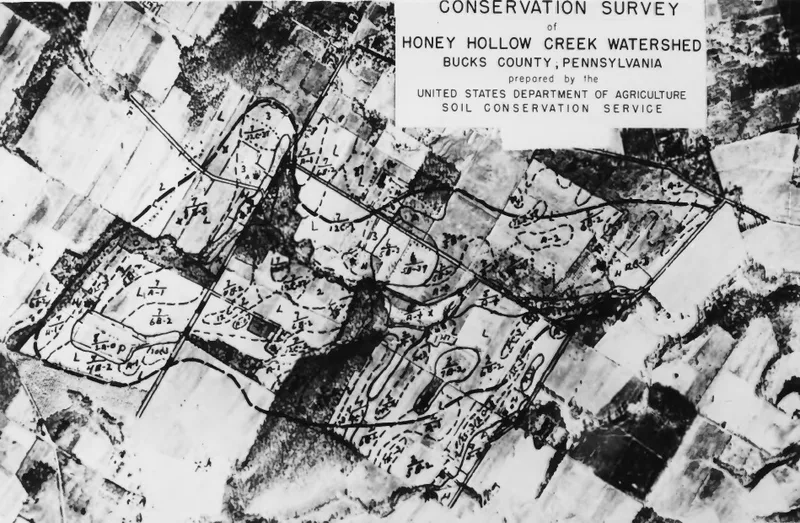
Honey Hollow Watershed is a district of five farms along Honey Hollow Brook near New Hope in Bucks County, Pennsylvania. Its farmhouses and barns include stone dwellings from the early 18th century, one of them dated 1747 and cut into a stone wall, with corner fireplaces, poplar vertical sheathing, and over-door ventilators typical of early southeastern Pennsylvania English-type homes. The Forrest Crooks house and a stone barn are among the buildings photographed in restored condition. The farms are held by the Honey Hollow Watershed Association, whose members worked together on soil and water conservation. The land's management, documented through the Soil Conservation Service and local histories, is regarded as a significant example of watershed conservation. The property was recognized for its combination of colonial buildings and conservation history, which together form a single historic landscape in the Delaware River valley.
Machine-generated summary. This summary was generated by a language model from the official nomination document and has not been reviewed line by line by an editor. It may contain errors. Check the source document before relying on any detail. Source: nomination document (PDF) · catalog entry. Generated October 2026 (model claude-haiku-5-5, prompt v1.1-2026-10-29).
| Areas of significance | Conservation, Agriculture |
|---|---|
| Acreage | 650 |
| Boundary source | NPS cultural-resource GIS polygon |
| Full listing page | Honey Hollow Watershed (property record) |
What listing means for this property
This is a historic district. Buildings within its boundary are either contributing (they add to the district's significance) or non-contributing. Owners of contributing income-producing buildings can claim the 20% federal rehabilitation tax credit; homeowners should look at state credits. National Register districts impose no design review by themselves; a local historic district ordinance, if one exists, does (the difference explained).
General information, not legal or tax advice. Rules change; confirm with your State Historic Preservation Office or a qualified adviser.