Honesdale Residential Historic District

Why it's listed
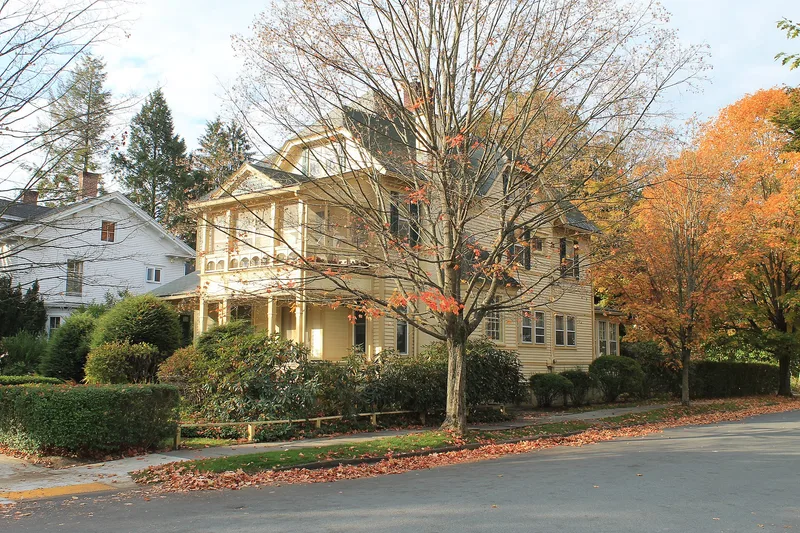
Honesdale's north residential district is an intact neighborhood of houses built between about 1830 and 1940, spread along North Main Street and the streets to its east and west. The largest homes, many two and a half stories with wood frames, were built for merchants and managers, while smaller houses were built for working people. The district's architecture includes Queen Anne, Italianate, Shingle, Second Empire and Greek Revival examples. Honesdale became county seat in 1841, and the Delaware and Hudson Canal and coal trade drove the building boom that followed. Local industries, including cut glass and a shoe factory, also shaped the district. Builders William and Frederick Kreitner were responsible for more than fifty houses here. The district is listed for its concentration of buildings that embody these styles and periods of construction, and for the relatively unaltered condition of most of them.
Machine-generated summary. This summary was generated by a language model from the official nomination document and has not been reviewed line by line by an editor. It may contain errors. Check the source document before relying on any detail. Source: nomination document (PDF) · catalog entry. Generated October 2026 (model claude-haiku-5-5, prompt v1.1-2026-10-29).
| Period of significance | 1830-1947 |
|---|---|
| Styles | Queen Anne, Italianate, Shingle, Colonial Revival, Second Empire, Greek Revival, Folk Victorian |
| Areas of significance | Architecture |
| Acreage | 97 |
| Boundary source | NPS cultural-resource GIS polygon |
| Full listing page | Honesdale Residential Historic District (property record) |
What listing means for this property
This is a historic district. Buildings within its boundary are either contributing (they add to the district's significance) or non-contributing. Owners of contributing income-producing buildings can claim the 20% federal rehabilitation tax credit; homeowners should look at state credits. National Register districts impose no design review by themselves; a local historic district ordinance, if one exists, does (the difference explained).
General information, not legal or tax advice. Rules change; confirm with your State Historic Preservation Office or a qualified adviser.