Holmes-Foster-Highlands Historic District

Why it's listed
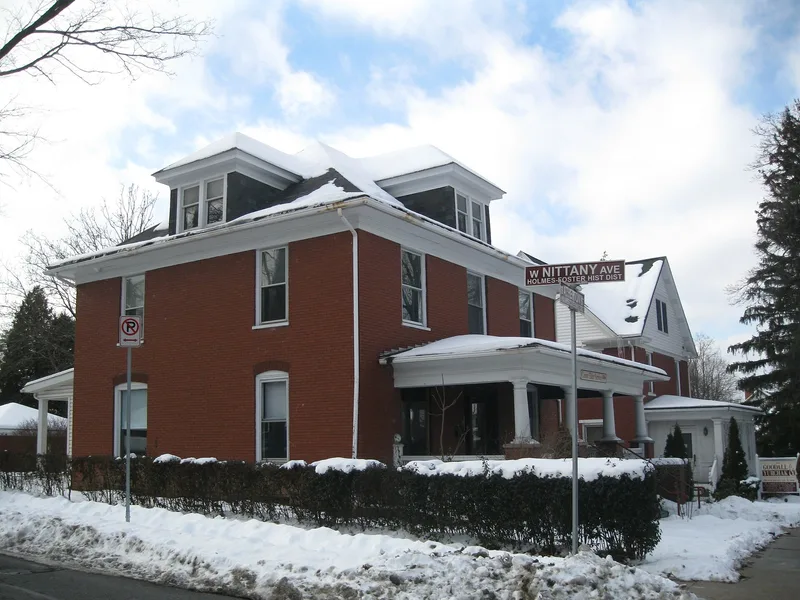
Southwest of the Penn State campus in State College, Pennsylvania, this residential district covers about sixty blocks developed mainly between the 1900s and the start of World War II. It contains 858 structures, 727 of them contributing, and includes vernacular Victorians, Four Squares, bungalows, Colonial and Tudor Revival houses, mansion-sized fraternity houses built in the 1920s and 1930s, two schools, three churches and Memorial Field. Development was driven by demand from faculty, staff and students for rental and owner-occupied housing. The district is regarded as an excellent example of how an early twentieth-century college town grew. Its mix of architect-designed houses, pattern book and mail-order designs, and large fraternity buildings gives it architectural significance. It also reflects the close ties between the university and the borough, including street names honoring Penn State presidents and faculty. Three surviving farmhouses link the area to the nineteenth-century Centre Furnace iron lands.
Machine-generated summary. This summary was generated by a language model from the official nomination document and has not been reviewed line by line by an editor. It may contain errors. Check the source document before relying on any detail. Source: nomination document (PDF) · catalog entry. Generated October 2026 (model claude-haiku-5-5, prompt v1.1-2026-10-29).
| Styles | Colonial Revival; Tudor Revival; Bungalow/Craftsman |
|---|---|
| Areas of significance | Architecture, Education, Community Planning and Development |
| Acreage | 321 |
| Boundary source | NPS cultural-resource GIS polygon |
| Full listing page | Holmes-Foster-Highlands Historic District (property record) |
What listing means for this property
This is a historic district. Buildings within its boundary are either contributing (they add to the district's significance) or non-contributing. Owners of contributing income-producing buildings can claim the 20% federal rehabilitation tax credit; homeowners should look at state credits. National Register districts impose no design review by themselves; a local historic district ordinance, if one exists, does (the difference explained).
General information, not legal or tax advice. Rules change; confirm with your State Historic Preservation Office or a qualified adviser.