Greenbelt Knoll Historic District

The National Park Service has not published a boundary polygon for this district; the map shows the listed properties inside it and the district's reference point.
Why it's listed
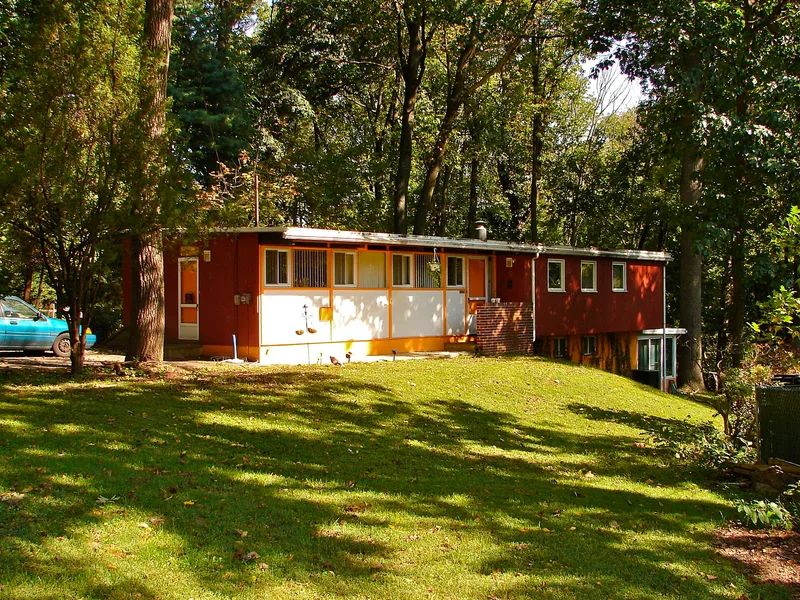
Greenbelt Knoll is a small residential district of 18 one-story frame houses on a wooded knoll in northeastern Philadelphia, built in 1955 and 1956 on lots of roughly one-third acre along a cul-de-sac called Longford Street. The houses share a low-pitched roof, broad eaves, vertical wood siding and projecting triangular brick fireplaces, yet none is an exact copy of another, since each was shaped by its site. The design kept most trees, and some grow through deck floors and breezeways. Morris Milgram developed the project as one of his integrated housing communities and lived there from its construction until 1976. Its significance rests on its role in the struggle for fair housing in the post-war North, and on its Modern architecture, which the nomination regards as among the most important groupings of residential Modernist buildings in Philadelphia.
Machine-generated summary. This summary was generated by a language model from the official nomination document and has not been reviewed line by line by an editor. It may contain errors. Check the source document before relying on any detail. Source: nomination document (PDF) · catalog entry. Generated October 2026 (model claude-haiku-5-5, prompt v1.1-2026-10-29).
| Period of significance | 1956-1960 |
|---|---|
| Styles | Modern |
| Areas of significance | Social History, Architecture |
| Acreage | 9 |
| Boundary source | not published |
| Full listing page | Greenbelt Knoll Historic District (property record) |
What listing means for this property
This is a historic district. Buildings within its boundary are either contributing (they add to the district's significance) or non-contributing. Owners of contributing income-producing buildings can claim the 20% federal rehabilitation tax credit; homeowners should look at state credits. National Register districts impose no design review by themselves; a local historic district ordinance, if one exists, does (the difference explained).
General information, not legal or tax advice. Rules change; confirm with your State Historic Preservation Office or a qualified adviser.