Gehman, John, Farm

Why it's listed
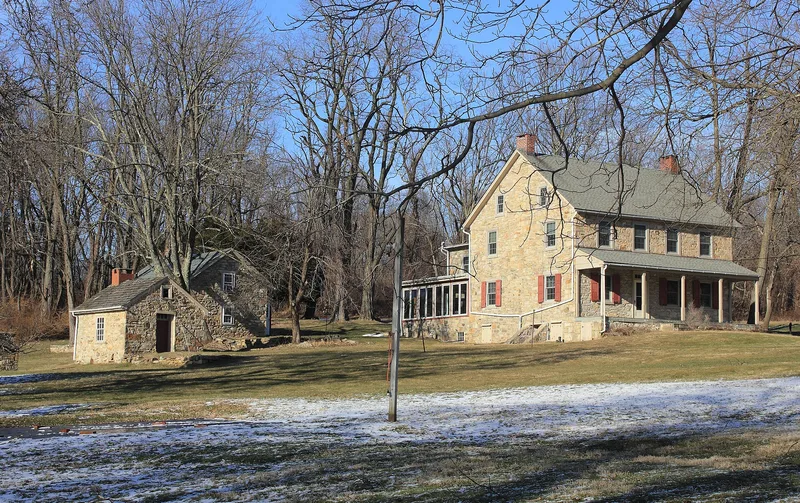
Hilly farmland on a dirt road in Hereford Township, Berks County, holds a group of stone and log buildings begun in the 1760s by the Gehman family. The farm was bought in 1767 by Rev. John Gehman, a Mennonite minister, and the Swiss bank house, a multi-purpose domestic building with a basement kitchen and a log upper floor, is probably his work. His son John S. Gehman built a large stone bank barn in 1806, dated on a wooden board, along with a stone farmhouse, a stable, a stone wagon shed and a springhouse dated 1847. The farm is regarded as a rare survival of an early nineteenth century hill farm. John S. Gehman was a farmer and distiller who sent applejack by wagon to Philadelphia. The farm's buildings, fields and fencerows have changed little since the 1800s, which gives the group its importance for understanding Berks County farm life.
Machine-generated summary. This summary was generated by a language model from the official nomination document and has not been reviewed line by line by an editor. It may contain errors. Check the source document before relying on any detail. Source: nomination document (PDF) · catalog entry. Generated October 2026 (model claude-haiku-5-5, prompt v1.1-2026-10-29).
| Period of significance | 1767-1940 |
|---|---|
| Styles | Swiss bankhouse; standard Pennsylvania banked forebay barn |
| Areas of significance | Agriculture, Architecture |
| Acreage | 87 |
| Boundary source | NPS cultural-resource GIS polygon |
| Full listing page | Gehman, John, Farm (property record) |
What listing means for this property
This is a historic district. Buildings within its boundary are either contributing (they add to the district's significance) or non-contributing. Owners of contributing income-producing buildings can claim the 20% federal rehabilitation tax credit; homeowners should look at state credits. National Register districts impose no design review by themselves; a local historic district ordinance, if one exists, does (the difference explained).
General information, not legal or tax advice. Rules change; confirm with your State Historic Preservation Office or a qualified adviser.