Fort Hunter Historic District

Why it's listed
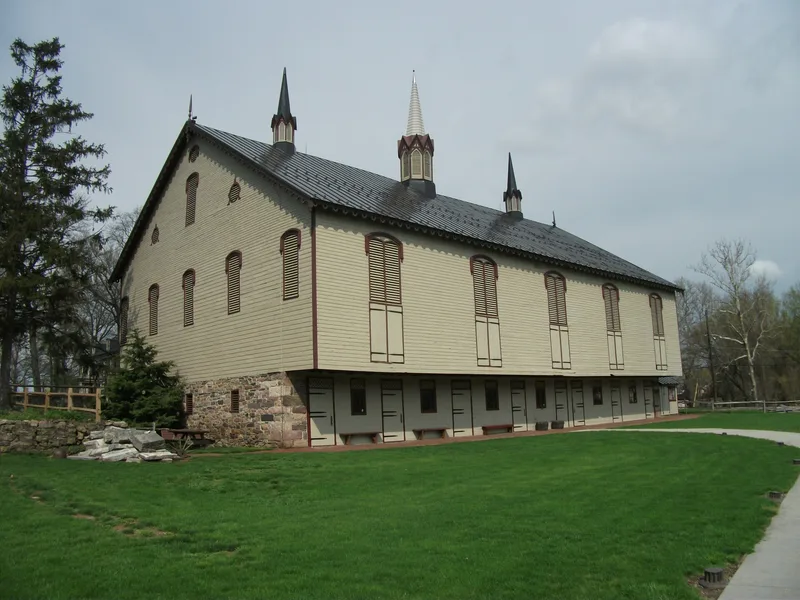
Fort Hunter District sits on the Susquehanna River and Fishing Creek about six miles north of Harrisburg, where settlement dates to about 1720. Benjamin Chambers was the first settler, and the site later became Hunter's Mill. During the French and Indian Wars, a supply fort and garrison of about 100 men were established here as part of a chain of forts. After the Revolution, Archibald McAllister acquired the property and built a large stone residence in 1814. The district holds a symmetrical Georgian mansion, a frame barn built in 1876 with ornate bargeboards and a hexagonal cupola, a blacksmith shop with most of its tools still present, a stone tavern, and a section of the Pennsylvania Canal. Its architecture and archaeological potential for the fort and garrison are the main reasons for its listing.
Machine-generated summary. This summary was generated by a language model from the official nomination document and has not been reviewed line by line by an editor. It may contain errors. Check the source document before relying on any detail. Source: nomination document (PDF) · catalog entry. Generated October 2026 (model claude-haiku-5-5, prompt v1.1-2026-10-29).
| Period of significance | 1800-1899 |
|---|---|
| Styles | Georgian (McAllister Mansion); high style Victorian (large frame barn); board and batten folk style (farm house) |
| Areas of significance | Historic - Non-Aboriginal, Military, Exploration/Settlement, Architecture |
| Acreage | 32 |
| Boundary source | NPS cultural-resource GIS polygon |
| Full listing page | Fort Hunter Historic District (property record) |
What listing means for this property
This is a historic district. Buildings within its boundary are either contributing (they add to the district's significance) or non-contributing. Owners of contributing income-producing buildings can claim the 20% federal rehabilitation tax credit; homeowners should look at state credits. National Register districts impose no design review by themselves; a local historic district ordinance, if one exists, does (the difference explained).
General information, not legal or tax advice. Rules change; confirm with your State Historic Preservation Office or a qualified adviser.