Fisher's Lane

Why it's listed
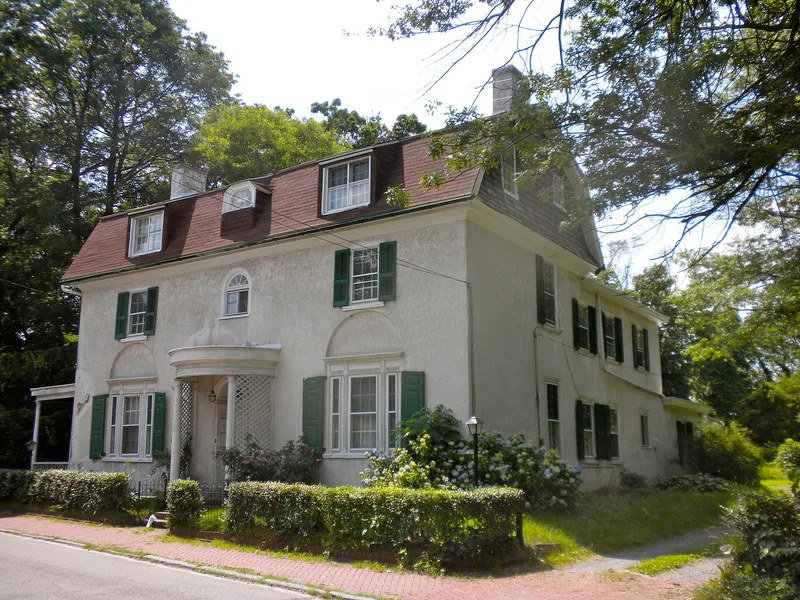
East Logan Street in Germantown runs between Hood Cemetery and Stenton Avenue and holds about eleven properties of stone, stucco and brick houses, carriage houses and greenhouse ruins, mostly built from the 1850s through the 1880s. The earliest part of 39 East Logan Street may date to 1729, though most of the present fabric is 19th century. The house at 53 East Logan Street was built in the late 1850s for T. Charlton Henry, a Philadelphia financier and bank founder, as a large Italianate villa set back from the street. Its ground-floor interior keeps walnut woodwork, plaster cornices and stencilled decoration from the 1870s. Nearby houses at 69, 75 and 81 were built between 1860 and 1871 and kept their street elevations largely unchanged. The street is significant as an early suburban streetscape that survived intact from the period of its greatest development in the 1870s and 1880s, in contrast with the rowhouses that surround it.
Machine-generated summary. This summary was generated by a language model from the official nomination document and has not been reviewed line by line by an editor. It may contain errors. Check the source document before relying on any detail. Source: nomination document (PDF) · catalog entry. Generated October 2026 (model claude-haiku-5-5, prompt v1.1-2026-10-29).
| Period of significance | 1850-1899 |
|---|---|
| Styles | Italianate villa; Eastlake (interior vestibule) |
| Areas of significance | Community Planning and Development, Architecture, Social History |
| Acreage | 5 |
| Boundary source | NPS cultural-resource GIS polygon |
| Full listing page | Fisher's Lane (property record) |
What listing means for this property
This is a historic district. Buildings within its boundary are either contributing (they add to the district's significance) or non-contributing. Owners of contributing income-producing buildings can claim the 20% federal rehabilitation tax credit; homeowners should look at state credits. National Register districts impose no design review by themselves; a local historic district ordinance, if one exists, does (the difference explained).
General information, not legal or tax advice. Rules change; confirm with your State Historic Preservation Office or a qualified adviser.