Fetter's Mill Village Historic District

The National Park Service has not published a boundary polygon for this district; the map shows the listed properties inside it and the district's reference point.
Why it's listed
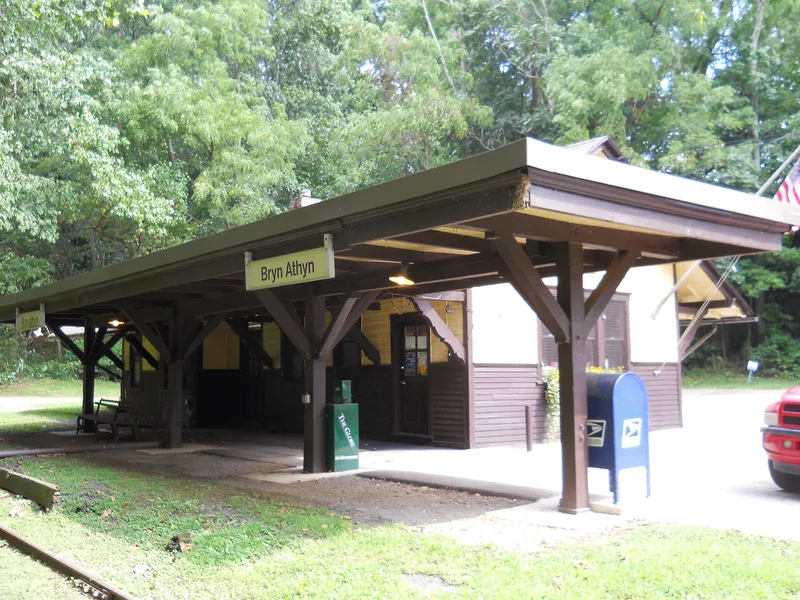
Fetter's Mill Village is a cluster of stone, stucco and frame buildings in a wooded valley along Pennypack Creek, with its earliest parts dating to about 1740. A grist mill was built there by Joshua Morris for Quaker investors from Abington, and the farmhouse, barn and wagon shed were in place by 1798. The railroad reached the village in 1878, bringing a station that opened around 1891 and was replaced in 1902. After milling ceased in the late 1890s, artists rented and bought the empty buildings, and John R. Conner painted and taught in the wagon shed between 1914 and 1931. Louis Ewald kept a studio in the mill for decades. The district's buildings, iron bridge of 1883, and rural setting are valued for their intact condition and for showing how a mill village became a rail-served artists' colony.
Machine-generated summary. This summary was generated by a language model from the official nomination document and has not been reviewed line by line by an editor. It may contain errors. Check the source document before relying on any detail. Source: nomination document (PDF) · catalog entry. Generated October 2026 (model claude-haiku-5-5, prompt v1.1-2026-10-29).
| Period of significance | C. 1740-1954 |
|---|---|
| Styles | Colonial; Federal |
| Areas of significance | Art, Industry, Transportation |
| Acreage | 7 |
| Boundary source | not published |
| Full listing page | Fetter's Mill Village Historic District (property record) |
What listing means for this property
This is a historic district. Buildings within its boundary are either contributing (they add to the district's significance) or non-contributing. Owners of contributing income-producing buildings can claim the 20% federal rehabilitation tax credit; homeowners should look at state credits. National Register districts impose no design review by themselves; a local historic district ordinance, if one exists, does (the difference explained).
General information, not legal or tax advice. Rules change; confirm with your State Historic Preservation Office or a qualified adviser.