Evergreen Hamlet

The National Park Service has not published a boundary polygon for this district; the map shows the listed properties inside it and the district's reference point.
Why it's listed
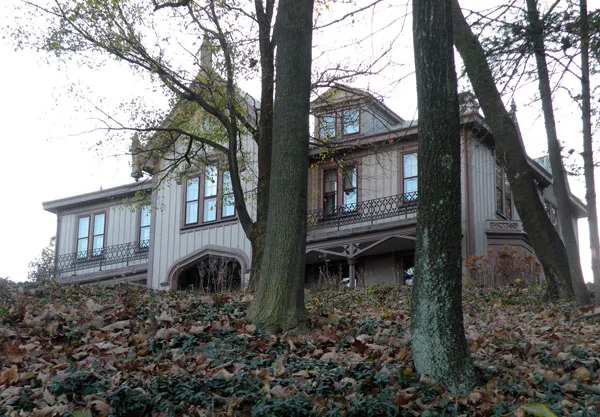
Four houses on a wooded hill in Ross Township, Allegheny County, were built in 1851-1852 as part of Evergreen Hamlet, a planned community of suburban dwellings. The community was founded in 1851 by a group of Pittsburgh citizens, including the lawyer William Shinn and the dry goods merchant Wade Hampton, who sought the comforts of country life within reach of the city. The 85-acre tract was surveyed by the firm Hastings and Preiser, and the houses were built largely by J.W. Kerr. The founders' charter set out rules for communal living and a shared schoolhouse, and the settlement was dissolved in 1866, after only four houses had been built. Each house reflects mid-Victorian eclecticism, combining Greek Revival doorways, Gothic Revival windows and bargeboards, and Italianate brackets. The houses are notable for their jigsaw-patterned verandas and their survival in excellent condition.
Machine-generated summary. This summary was generated by a language model from the official nomination document and has not been reviewed line by line by an editor. It may contain errors. Check the source document before relying on any detail. Source: nomination document (PDF) · catalog entry. Generated October 2026 (model claude-haiku-5-5, prompt v1.1-2026-10-29).
| Period of significance | 1851-1852 |
|---|---|
| Styles | Mid-Victorian eclecticism with Greek Revival, Gothic Revival and Italianate features |
| Areas of significance | Community Planning and Development, Landscape Architecture, Architecture, Social History |
| Acreage | 8 |
| Boundary source | not published |
| Full listing page | Evergreen Hamlet (property record) |
What listing means for this property
This is a historic district. Buildings within its boundary are either contributing (they add to the district's significance) or non-contributing. Owners of contributing income-producing buildings can claim the 20% federal rehabilitation tax credit; homeowners should look at state credits. National Register districts impose no design review by themselves; a local historic district ordinance, if one exists, does (the difference explained).
General information, not legal or tax advice. Rules change; confirm with your State Historic Preservation Office or a qualified adviser.