Evansburg Historic District

Why it's listed
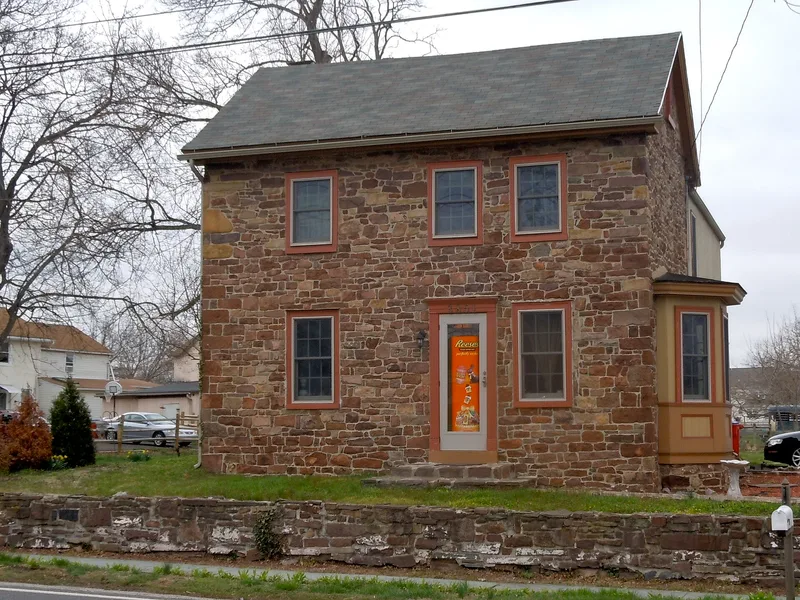
Evansburg is a district of stone farmhouses, inns, a church, a mill and a bridge strung along Germantown Pike and Skippack Creek in central Montgomery County. Most of its houses are plastered fieldstone buildings from the late eighteenth and early nineteenth centuries, with end chimneys and a typical regional plan. The Glebe House, part of which dates before 1737, served as a rectory for St. James Church and hosted a war council of Washington's troops on September 20, 1777. The 1792 Skippack Bridge, an eight-arch stone span thirty-three feet wide, is regarded as the oldest bridge of its size in continuous heavy service in America. Religious history is central to the district: St. James Church dates to 1721, and the Funkite Cemetery holds the graves of Mennonites excommunicated for supporting the Revolution. The district is listed for its architecture, its transportation role, and its links to the colonial era.
Machine-generated summary. This summary was generated by a language model from the official nomination document and has not been reviewed line by line by an editor. It may contain errors. Check the source document before relying on any detail. Source: nomination document (PDF) · catalog entry. Generated October 2026 (model claude-haiku-5-5, prompt v1.1-2026-10-29).
| Areas of significance | Industry, Commerce, Agriculture, Military, Engineering, Transportation, Education, Architecture, Religion |
|---|---|
| Acreage | 770 |
| Boundary source | NPS cultural-resource GIS polygon |
| Full listing page | Evansburg Historic District (property record) |
What listing means for this property
This is a historic district. Buildings within its boundary are either contributing (they add to the district's significance) or non-contributing. Owners of contributing income-producing buildings can claim the 20% federal rehabilitation tax credit; homeowners should look at state credits. National Register districts impose no design review by themselves; a local historic district ordinance, if one exists, does (the difference explained).
General information, not legal or tax advice. Rules change; confirm with your State Historic Preservation Office or a qualified adviser.