Ephrata Cloister

Why it's listed
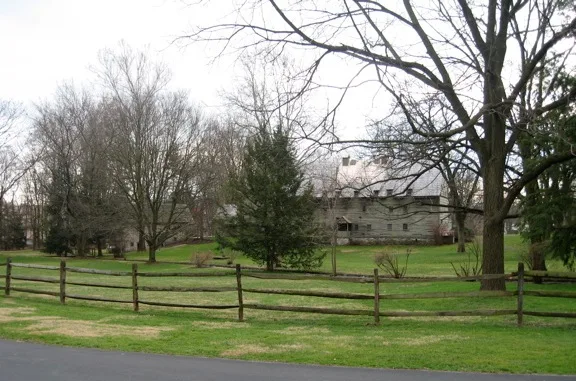
Built between 1740 and 1746 in Ephrata, Lancaster County, the Cloister is a group of buildings erected by the Society of the Solitary, a celibate religious community founded by the German Pietist Conrad Beissel in 1732. The main structures are the Saal, a five-story half-timbered chapel completed in 1740 with hewn oak framing and split oak shingles, and the Saron, a four-story oak log house of 1742-43 built for the Sisters. Both show steep roofs, shed dormers and narrow central chimneys that recall medieval German architecture. At its peak around 1750 the community had some 300 members and ran its own gristmill, bakery, pottery and paper mill. It operated one of the earliest printing presses in the colonies, dating from 1743, and produced a large body of hymnals and books, including a 1743 German Bible. Its handwritten illuminated manuscripts and singing school are also noted. The buildings were acquired by the State of Pennsylvania in 1941 and restored.
Machine-generated summary. This summary was generated by a language model from the official nomination document and has not been reviewed line by line by an editor. It may contain errors. Check the source document before relying on any detail. Source: nomination document (PDF) · catalog entry. Generated October 2026 (model claude-haiku-5-5, prompt v1.1-2026-10-29).
| Period of significance | 1740-1746 |
|---|---|
| Styles | Dutch Colonial |
| Areas of significance | Architecture, Religion |
| Acreage | 30 |
| Boundary source | NPS cultural-resource GIS polygon |
| Full listing page | Ephrata Cloister (property record) |
What listing means for this property
This is a historic district. Buildings within its boundary are either contributing (they add to the district's significance) or non-contributing. Owners of contributing income-producing buildings can claim the 20% federal rehabilitation tax credit; homeowners should look at state credits. National Register districts impose no design review by themselves; a local historic district ordinance, if one exists, does (the difference explained).
General information, not legal or tax advice. Rules change; confirm with your State Historic Preservation Office or a qualified adviser.