Elmwood Park Historic District

Why it's listed
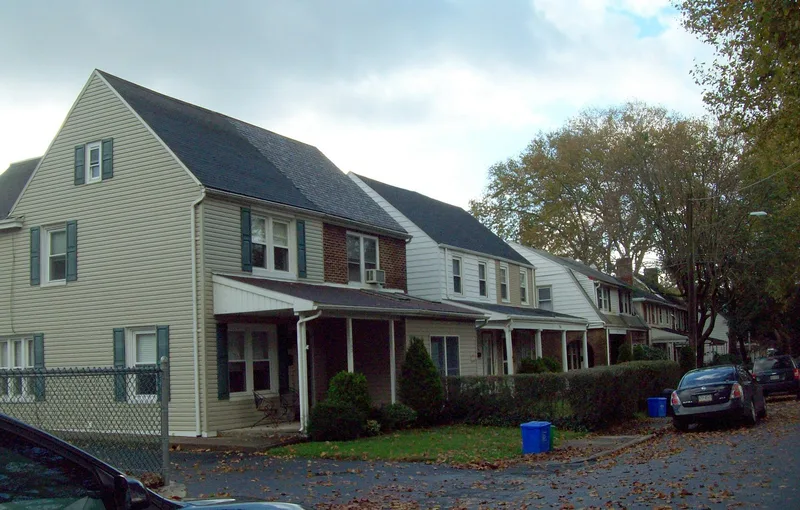
Built between 1917 and 1920 on a plain six blocks northeast of Bethlehem's midtown, Elmwood Park is a residential district of one-and-one-half and two-story houses, mostly brick, clapboard, or stucco, with Colonial Revival details. The developers Wood and Hawthorne of Pittsburgh laid out 235 lots around an oval street and a central playground, creating a planned village-like setting. The district includes 68 contributing houses in forms ranging from single dwellings and double residences to butterfly-plan triple units and apartment buildings with six or seven residences. Its significance lies in its uniformity of mass, scale, roof slopes, porches, and window arrangement, which set it apart from the piecemeal housing common in Bethlehem. Built to house workers at the Bethlehem Steel Company during World War I, it is regarded as an early example of large-scale unified housing in the region. Later alterations and post-1950 infill have reduced its uniformity somewhat.
Machine-generated summary. This summary was generated by a language model from the official nomination document and has not been reviewed line by line by an editor. It may contain errors. Check the source document before relying on any detail. Source: nomination document (PDF) · catalog entry. Generated October 2026 (model claude-haiku-5-5, prompt v1.1-2026-10-29).
| Period of significance | 1917-1920 |
|---|---|
| Styles | Colonial Revival |
| Areas of significance | Architecture |
| Acreage | 14.9 |
| Boundary source | NPS cultural-resource GIS polygon |
| Full listing page | Elmwood Park Historic District (property record) |
What listing means for this property
This is a historic district. Buildings within its boundary are either contributing (they add to the district's significance) or non-contributing. Owners of contributing income-producing buildings can claim the 20% federal rehabilitation tax credit; homeowners should look at state credits. National Register districts impose no design review by themselves; a local historic district ordinance, if one exists, does (the difference explained).
General information, not legal or tax advice. Rules change; confirm with your State Historic Preservation Office or a qualified adviser.