Eberhardt and Ober Brewery

The National Park Service has not published a boundary polygon for this district; the map shows the listed properties inside it and the district's reference point.
Why it's listed
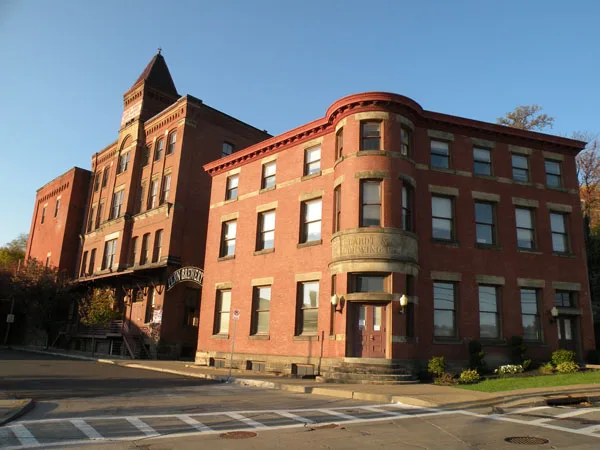
Red brick buildings on a hillside corner at the base of Troy Hill in Pittsburgh's North Side make up the surviving core of the Eberhardt & Ober Brewery. Built between 1883 and 1914, the group includes the Racking, Wash and Storage Building, a four-story structure with a pyramidal-roofed tower, and the 1897 Office Building, which carries a stone inscription reading Rebuilt 1897. Stone vaults and manmade cooling caves run into the hillside, a siting typical of breweries before refrigeration. The complex is regarded as the oldest of only three surviving brewery complexes in the city and the only one on the North Side, which was then the City of Allegheny. It is also the last remaining facility of the independent breweries that were absorbed into the Pittsburgh Brewing Company in 1899 and the Independent Brewing Company in 1900. The plant continued operating through Prohibition by producing near-beer, ice cream and cold storage. Its Italianate design represents the industrial building style of the mid to late nineteenth century.
Machine-generated summary. This summary was generated by a language model from the official nomination document and has not been reviewed line by line by an editor. It may contain errors. Check the source document before relying on any detail. Source: nomination document (PDF) · catalog entry. Generated October 2026 (model claude-haiku-5-5, prompt v1.1-2026-10-29).
| Period of significance | 1883-1925 |
|---|---|
| Styles | Italianate, Romanesque, Classical, and utilitarian designs |
| Areas of significance | Industry, Architecture |
| Acreage | 4 |
| Boundary source | not published |
| Full listing page | Eberhardt and Ober Brewery (property record) |
What listing means for this property
This is a historic district. Buildings within its boundary are either contributing (they add to the district's significance) or non-contributing. Owners of contributing income-producing buildings can claim the 20% federal rehabilitation tax credit; homeowners should look at state credits. National Register districts impose no design review by themselves; a local historic district ordinance, if one exists, does (the difference explained).
General information, not legal or tax advice. Rules change; confirm with your State Historic Preservation Office or a qualified adviser.