East Carson Street Historic District

Why it's listed
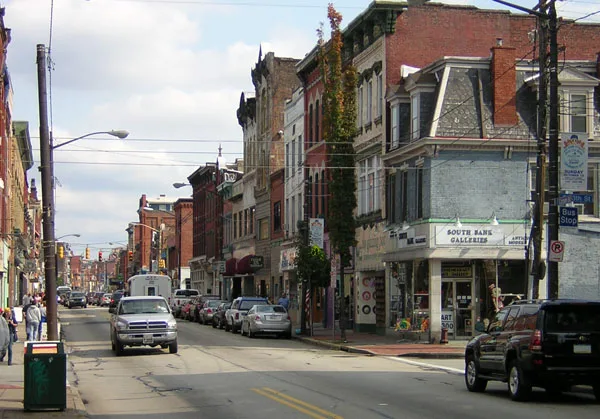
Brick commercial rows, mostly built between 1870 and 1910, line East Carson Street along a mile of the South Side Flats in Pittsburgh. Most are two to four stories high and open directly onto the sidewalk, with contiguous facades forming continuous street walls. Many display Romanesque, Italianate and Second Empire ornament, including brackets, corbelling, cast iron details, leaded glass transoms and cornices. Earlier buildings from the 1850s and 1860s survive around Bedford Square and the old Birmingham settlement. The street was incorporated into the Washington Pike in 1818 and became the area's commercial spine. Local builders including the Benz Brothers and John Seibert produced much of the district's fabric. The district is regarded as the best example of a late nineteenth century low rise commercial district in Allegheny County, and its upper floors preserve much of the original character.
Machine-generated summary. This summary was generated by a language model from the official nomination document and has not been reviewed line by line by an editor. It may contain errors. Check the source document before relying on any detail. Source: nomination document (PDF) · catalog entry. Generated October 2026 (model claude-haiku-5-5, prompt v1.1-2026-10-29).
| Period of significance | 1850-present |
|---|---|
| Styles | Romanesque, Italianate and Second Empire |
| Areas of significance | Community Planning and Development, Architecture |
| Acreage | 32 |
| Boundary source | NPS cultural-resource GIS polygon |
| Full listing page | East Carson Street Historic District (property record) |
What listing means for this property
This is a historic district. Buildings within its boundary are either contributing (they add to the district's significance) or non-contributing. Owners of contributing income-producing buildings can claim the 20% federal rehabilitation tax credit; homeowners should look at state credits. National Register districts impose no design review by themselves; a local historic district ordinance, if one exists, does (the difference explained).
General information, not legal or tax advice. Rules change; confirm with your State Historic Preservation Office or a qualified adviser.