Druim Moir Historic District

Why it's listed
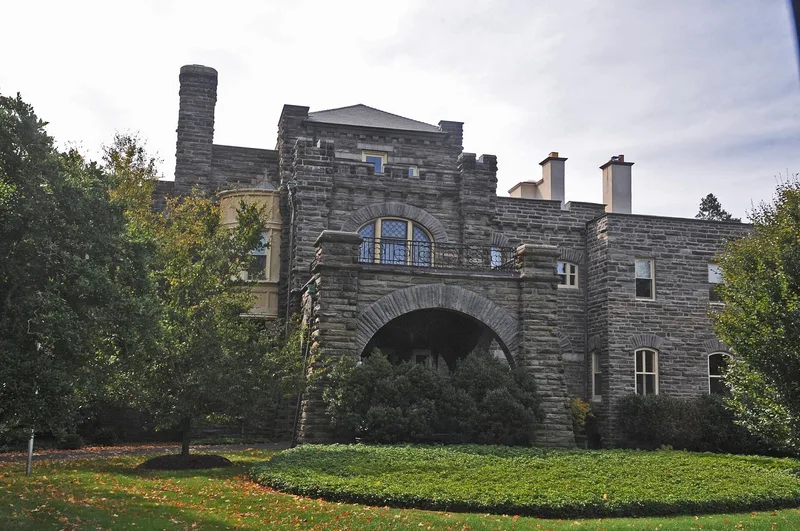
Druim Moir is a two-story schist house on a knoll above Fairmount Park in Chestnut Hill, Philadelphia. Henry Howard Houston, a financier and Pennsylvania Railroad director, had the house completed in 1886, when the architects G. W. and W. D. Hewitt rebuilt an earlier house designed by John Notman. Its picturesque massing, with cross-gables, a castellated tower and a turret, was typical of the period. Major alterations in 1942 removed upper elements, but the great hall and stairway, with oak wainscoting and carved balusters, remain intact. Robert Rodes McGoodwin designed the formal terraced gardens beginning in 1920, with sunken gardens, fountains and iron trellises. Nearby, Brinkwood, completed in 1887 for Samuel Frederic Houston, is regarded as an excellent Shingle Style house. The district is significant for its intact grounds and for its link to Houston's development of Chestnut Hill.
Machine-generated summary. This summary was generated by a language model from the official nomination document and has not been reviewed line by line by an editor. It may contain errors. Check the source document before relying on any detail. Source: nomination document (PDF) · catalog entry. Generated October 2026 (model claude-haiku-5-5, prompt v1.1-2026-10-29).
| Period of significance | 1886-1907 |
|---|---|
| Styles | Romanesque Revival; Shingle Style; picturesque eclecticism |
| Areas of significance | Community Planning and Development, Architecture |
| Acreage | 47.5 |
| Boundary source | NPS cultural-resource GIS polygon |
| Full listing page | Druim Moir Historic District (property record) |
What listing means for this property
This is a historic district. Buildings within its boundary are either contributing (they add to the district's significance) or non-contributing. Owners of contributing income-producing buildings can claim the 20% federal rehabilitation tax credit; homeowners should look at state credits. National Register districts impose no design review by themselves; a local historic district ordinance, if one exists, does (the difference explained).
General information, not legal or tax advice. Rules change; confirm with your State Historic Preservation Office or a qualified adviser.