Drexel Development Historic District

The National Park Service has not published a boundary polygon for this district; the map shows the listed properties inside it and the district's reference point.
Why it's listed
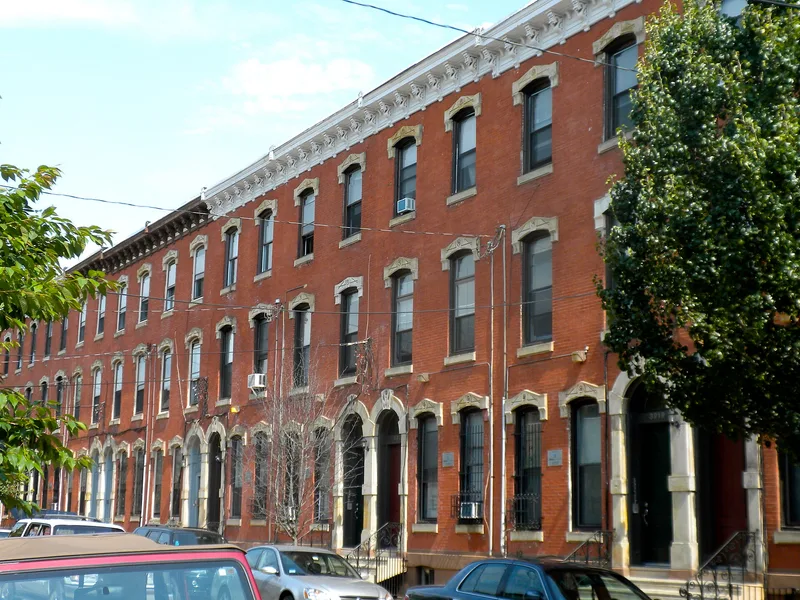
Row houses and small commercial buildings in West Philadelphia, largely built between 1870 and 1885 on speculative lots assembled by real estate broker Annesly R. Govett and banker Anthony J. Drexel. The district includes a large c. 1865 mixed residential and commercial building at the northeast corner of 40th and Baltimore, attributed to Samuel Sloan, with a tripartite facade, stuccoed walls and neo-grec shopfronts. Houses on Pine and Delancey show Italianate and Second Empire designs, including mansard roofs with slate shingles and bracketed dormers. The later Drexel rows, begun about 1883, have pressed-metal cornices and terra cotta panels. The nomination regards the group as a clear example of late nineteenth-century speculative housing, with architectural quality above the typical Philadelphia row and documented ownership transfers that show how builders and investors shared the risk of construction.
Machine-generated summary. This summary was generated by a language model from the official nomination document and has not been reviewed line by line by an editor. It may contain errors. Check the source document before relying on any detail. Source: nomination document (PDF) · catalog entry. Generated October 2026 (model claude-haiku-5-5, prompt v1.1-2026-10-29).
| Period of significance | 1870-1884 |
|---|---|
| Styles | Italianate; Second Empire; High Victorian row house |
| Areas of significance | Architecture |
| Acreage | 1 |
| Boundary source | not published |
| Full listing page | Drexel Development Historic District (property record) |
What listing means for this property
This is a historic district. Buildings within its boundary are either contributing (they add to the district's significance) or non-contributing. Owners of contributing income-producing buildings can claim the 20% federal rehabilitation tax credit; homeowners should look at state credits. National Register districts impose no design review by themselves; a local historic district ordinance, if one exists, does (the difference explained).
General information, not legal or tax advice. Rules change; confirm with your State Historic Preservation Office or a qualified adviser.