Donegal Presbyterian Church Complex

Why it's listed
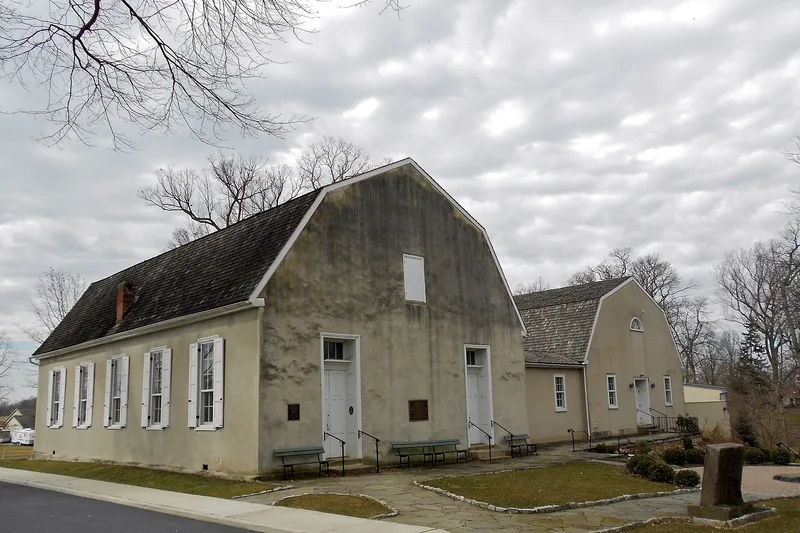
Stone church, cemetery and related buildings in rural western Lancaster County, Pennsylvania, built by Scots-Irish Presbyterian immigrants. The church was built in 1732 with rough-hewn stone walls and a gambrel roof, and its design followed the parent church in County Donegal, Ireland. It was remodeled in 1851, when the chapel was realigned and a narthex was created. The cemetery holds more than thirty graves of Revolutionary War soldiers, along with the grave of Reverend James Anderson, the congregation's first full-time minister. Nearby, a white oak called the Witness Tree marks the legend that Colonel Alexander Lowry rallied local men there in 1777 before they joined Washington's army. The 1810 William Kerr Study House and an 1899 sandstone war memorial also stand on the grounds. The complex is significant for its role in early Presbyterian church organization and in the patriotic traditions of the local community.
Machine-generated summary. This summary was generated by a language model from the official nomination document and has not been reviewed line by line by an editor. It may contain errors. Check the source document before relying on any detail. Source: nomination document (PDF) · catalog entry. Generated October 2026 (model claude-haiku-5-5, prompt v1.1-2026-10-29).
| Period of significance | 1732-1850 |
|---|---|
| Areas of significance | European, Exploration/Settlement, Religion |
| Acreage | 7.5 |
| Boundary source | NPS cultural-resource GIS polygon |
| Full listing page | Donegal Presbyterian Church Complex (property record) |
What listing means for this property
This is a historic district. Buildings within its boundary are either contributing (they add to the district's significance) or non-contributing. Owners of contributing income-producing buildings can claim the 20% federal rehabilitation tax credit; homeowners should look at state credits. National Register districts impose no design review by themselves; a local historic district ordinance, if one exists, does (the difference explained).
General information, not legal or tax advice. Rules change; confirm with your State Historic Preservation Office or a qualified adviser.