Dawson Historic District

Why it's listed
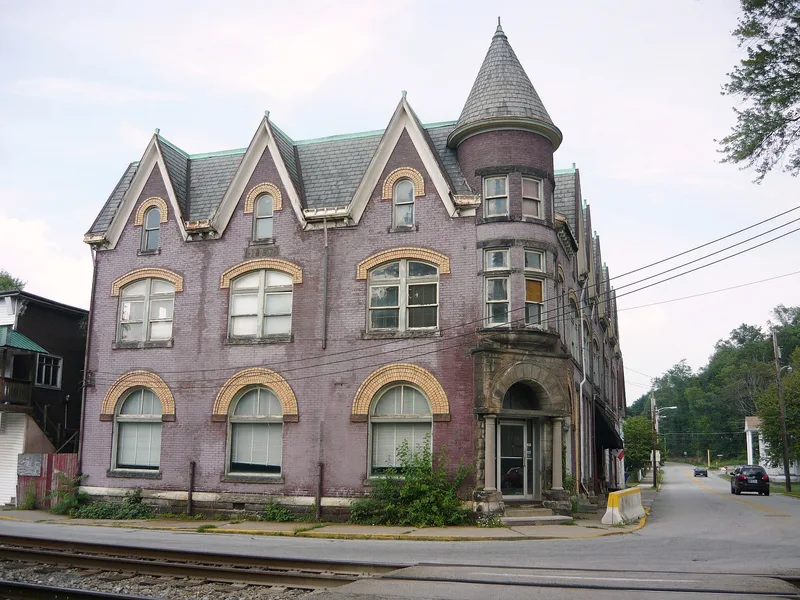
Dawson is a small borough of 120 buildings on a flood plain of the Youghiogheny River in Fayette County, Pennsylvania. Its streets hold frame and brick houses, commercial blocks and vernacular working-class dwellings built from about 1870 to 1947. The town grew from land settled by John Smilie in the late 1780s and was laid out by Alfred Howell in 1866 and 1871. It was incorporated in 1872. Dawson served as a residential and commercial centre for managers, miners and the Cochran family, whose Washington Coal and Coke Company operated nearby mines and a coke works. The population reached 668 in 1890 and about 1,800 by 1910. Its 1897 Queen Anne bank building, with a corner turret and slate mansard roof, and the 1927 Gothic Methodist church are among the most prominent buildings. Many houses retain original materials. The district reflects a town that combined elite houses and workers' homes side by side, unlike company patch towns.
Machine-generated summary. This summary was generated by a language model from the official nomination document and has not been reviewed line by line by an editor. It may contain errors. Check the source document before relying on any detail. Source: nomination document (PDF) · catalog entry. Generated October 2026 (model claude-haiku-5-5, prompt v1.1-2026-10-29).
| Period of significance | 1870-1947 |
|---|---|
| Styles | Queen Anne, Classical Revival, Bungalow, Greek Revival, Italianate, Colonial Revival, Gothic, Art Moderne, vernacular |
| Areas of significance | Industry, Architecture |
| Acreage | 35.5 |
| Boundary source | NPS cultural-resource GIS polygon |
| Full listing page | Dawson Historic District (property record) |
What listing means for this property
This is a historic district. Buildings within its boundary are either contributing (they add to the district's significance) or non-contributing. Owners of contributing income-producing buildings can claim the 20% federal rehabilitation tax credit; homeowners should look at state credits. National Register districts impose no design review by themselves; a local historic district ordinance, if one exists, does (the difference explained).
General information, not legal or tax advice. Rules change; confirm with your State Historic Preservation Office or a qualified adviser.