Dale Furnace and Forge Historic District

Why it's listed
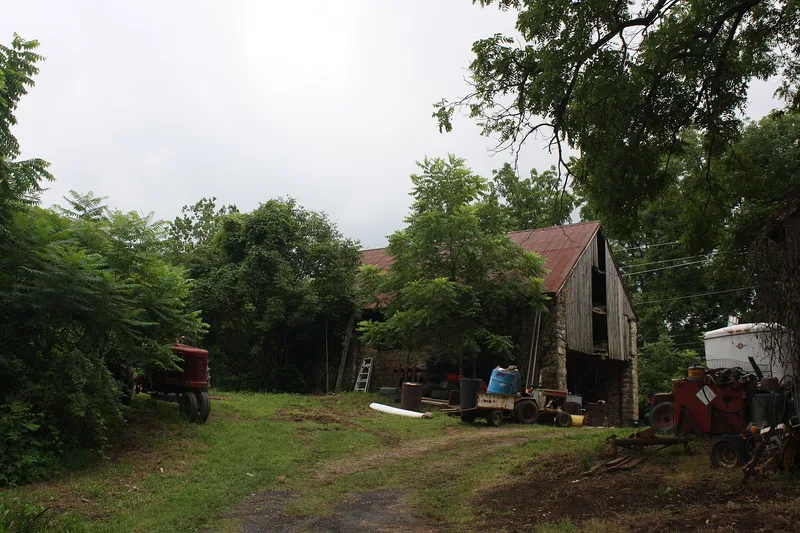
Dale Furnace and Forge is a stone-built iron plantation in a valley north of the village of Dale, along the West Branch of the Perkiomen Creek. Joseph and Thomas Potts built the furnace in 1791, and a forge followed between 1804 and 1811. The furnace produced stoves, skillets, kettles and anvils from ore brought largely from the Colebrookdale mines. Its operations ceased after about 1822, after which the forge became the centre of activity. It produced bloom and bar iron along with chisels, hinges, axles and plows, and closed in 1868 when its last pig iron supplier went out of blast. The district contains the ironmaster's mansion, begun in 1791 in the Federal style, along with a barn, a worker's house, and a Carpenter Gothic office building dating from 1827 and 1854. Stone ruins of the furnace stack, forge foundations, and dam survive as archaeological remains. The 1835 map of the complex is a key record of the layout.
Machine-generated summary. This summary was generated by a language model from the official nomination document and has not been reviewed line by line by an editor. It may contain errors. Check the source document before relying on any detail. Source: nomination document (PDF) · catalog entry. Generated October 2026 (model claude-haiku-5-5, prompt v1.1-2026-10-29).
| Period of significance | 1791-1868 |
|---|---|
| Styles | Federal (ironmaster's mansion); Carpenter Gothic (counting house) |
| Areas of significance | Industry, Historic - Non-Aboriginal, Architecture |
| Acreage | 19 |
| Boundary source | NPS cultural-resource GIS polygon |
| Full listing page | Dale Furnace and Forge Historic District (property record) |
What listing means for this property
This is a historic district. Buildings within its boundary are either contributing (they add to the district's significance) or non-contributing. Owners of contributing income-producing buildings can claim the 20% federal rehabilitation tax credit; homeowners should look at state credits. National Register districts impose no design review by themselves; a local historic district ordinance, if one exists, does (the difference explained).
General information, not legal or tax advice. Rules change; confirm with your State Historic Preservation Office or a qualified adviser.