Coventryville Historic District

Why it's listed
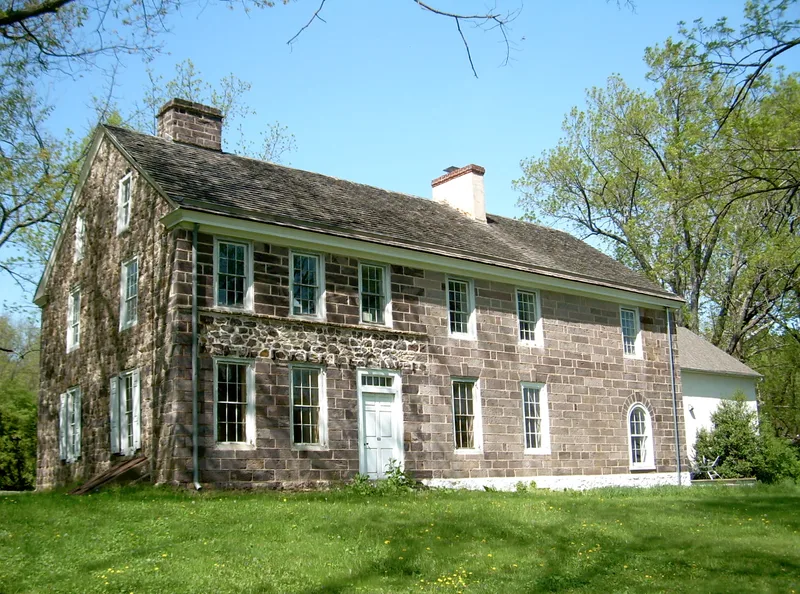
Coventryville is a village in northern Chester County, Pennsylvania, on high ground above French Creek, where an iron community grew up from 1717 onward. Samuel Nutt established Coventry Forge there, which the nomination describes as the first iron forge in Chester County and the second in the colony. Nutt's partners, William Branson and Mordecai Lincoln, helped develop Redding Furnace on Rock Run, where steel was first produced in 1732. Coventry House, built in stages from the 1740s to about 1803, contains notable Georgian woodwork and is tied by tradition to Franklin's fireplace stove experiments. George Chrisman's family built most of the village's stone houses from 1807 to the turn of the century, including modest workers' houses among larger dwellings. Later structures include a Methodist church of 1860 and a band wagon house of 1888. The district is listed for its concentration of original 18th- and 19th-century buildings and its role in iron-making history.
Machine-generated summary. This summary was generated by a language model from the official nomination document and has not been reviewed line by line by an editor. It may contain errors. Check the source document before relying on any detail. Source: nomination document (PDF) · catalog entry. Generated October 2026 (model claude-haiku-5-5, prompt v1.1-2026-10-29).
| Period of significance | 1700-1899 |
|---|---|
| Styles | Late Georgian-Early Federal (Chrisman houses); Georgian and Federal interior woodwork (Coventry House) |
| Areas of significance | Industry, Architecture |
| Acreage | 338 |
| Boundary source | NPS cultural-resource GIS polygon |
| Full listing page | Coventryville Historic District (property record) |
What listing means for this property
This is a historic district. Buildings within its boundary are either contributing (they add to the district's significance) or non-contributing. Owners of contributing income-producing buildings can claim the 20% federal rehabilitation tax credit; homeowners should look at state credits. National Register districts impose no design review by themselves; a local historic district ordinance, if one exists, does (the difference explained).
General information, not legal or tax advice. Rules change; confirm with your State Historic Preservation Office or a qualified adviser.