Clinton Street Historic District

The National Park Service has not published a boundary polygon for this district; the map shows the listed properties inside it and the district's reference point.
Why it's listed
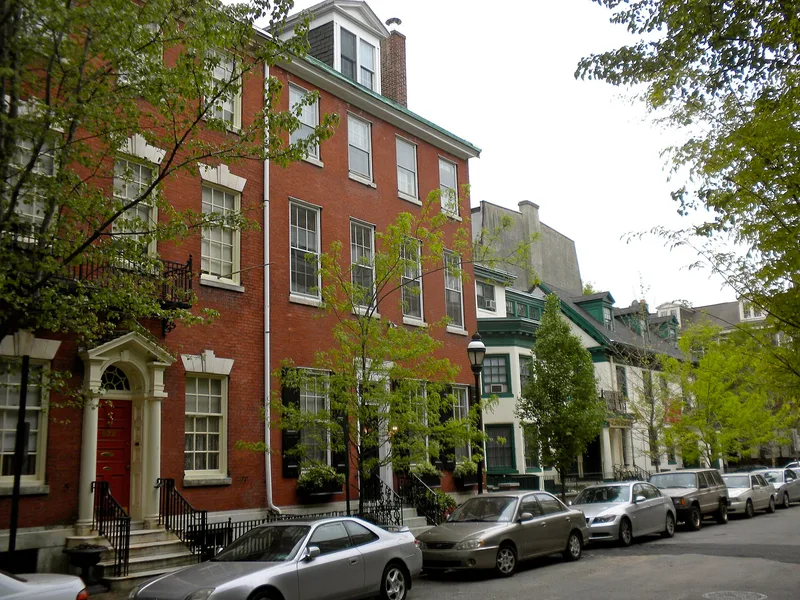
Clinton Street in downtown Philadelphia is a two-block row of attached houses, most of them three and a half or four stories tall and built of pressed brick with marble or stone sills, doorways, water tables and steps. All of the houses on the street were erected between 1835 and 1850. Many had shutters with panels on the first story and louvers above, and several share a doorway lintel with the neighboring house. Decorative details include cast and wrought iron stair railings, iron grilles on cellar windows, a painted iron spike sundial, fan lights, and fluted pilasters. The street was the fashionable address of its day, and residents included prominent Philadelphians such as Charles Biddle, Edward Wetherill and Henry J. Morris. The architect Addison Hutton lived at number 916 in the 1870s. Although many houses now hold multiple apartments, their facades remain much as they were, preserving the street's quiet 19th century character.
Machine-generated summary. This summary was generated by a language model from the official nomination document and has not been reviewed line by line by an editor. It may contain errors. Check the source document before relying on any detail. Source: nomination document (PDF) · catalog entry. Generated October 2026 (model claude-haiku-5-5, prompt v1.1-2026-10-29).
| Period of significance | 1835-1850 |
|---|---|
| Areas of significance | Architecture |
| Acreage | 9.9 |
| Boundary source | not published |
| Full listing page | Clinton Street Historic District (property record) |
What listing means for this property
This is a historic district. Buildings within its boundary are either contributing (they add to the district's significance) or non-contributing. Owners of contributing income-producing buildings can claim the 20% federal rehabilitation tax credit; homeowners should look at state credits. National Register districts impose no design review by themselves; a local historic district ordinance, if one exists, does (the difference explained).
General information, not legal or tax advice. Rules change; confirm with your State Historic Preservation Office or a qualified adviser.