Cement City Historic District

Why it's listed
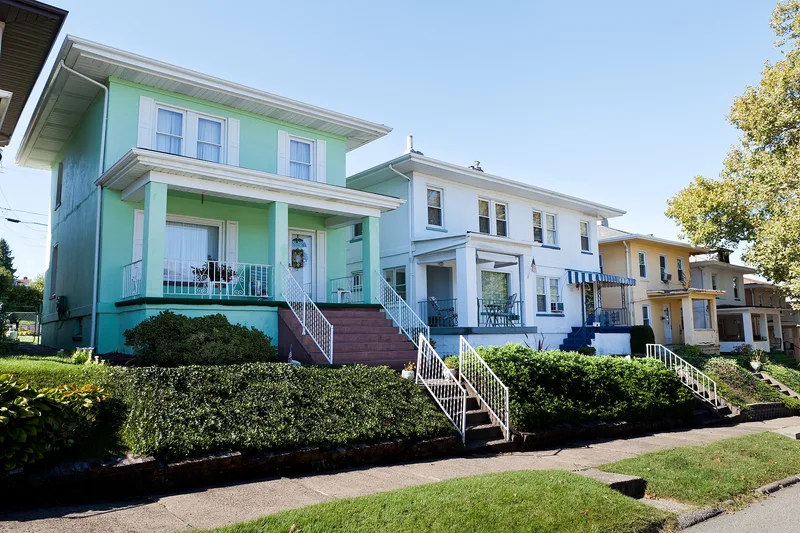
Built between 1916 and 1917 in South Donora, the Cement City Historic District is a group of 80 contributing houses constructed of poured-in-place concrete. The American Steel and Wire Company commissioned the houses to stabilize its workforce during rapid wartime growth, when many workers lacked family housing. Lambie Concrete House Corporation held the building contract and used reusable steel forms, and Aberthaw Construction served as contractor. The houses are finished in stucco and follow variations of the American four-square plan, with hipped roofs, porches, and concrete sidewalks. Planned for 152 units, the project stopped at 100 because of high costs and a shortage of skilled labor. The district is regarded as an intact example of early twentieth-century company housing and as a notable use of concrete construction for mass-produced, fireproof worker housing. Its streets, alleys, and rear yards largely retain their original layout.
Machine-generated summary. This summary was generated by a language model from the official nomination document and has not been reviewed line by line by an editor. It may contain errors. Check the source document before relying on any detail. Source: nomination document (PDF) · catalog entry. Generated October 2026 (model claude-haiku-5-5, prompt v1.1-2026-10-29).
| Period of significance | 1916-1945 |
|---|---|
| Styles | Prairie |
| Areas of significance | Industry, Community Planning and Development, Architecture |
| Acreage | 8.8 |
| Boundary source | NPS cultural-resource GIS polygon |
| Full listing page | Cement City Historic District (property record) |
What listing means for this property
This is a historic district. Buildings within its boundary are either contributing (they add to the district's significance) or non-contributing. Owners of contributing income-producing buildings can claim the 20% federal rehabilitation tax credit; homeowners should look at state credits. National Register districts impose no design review by themselves; a local historic district ordinance, if one exists, does (the difference explained).
General information, not legal or tax advice. Rules change; confirm with your State Historic Preservation Office or a qualified adviser.