Carson College for Orphan Girls

Why it's listed
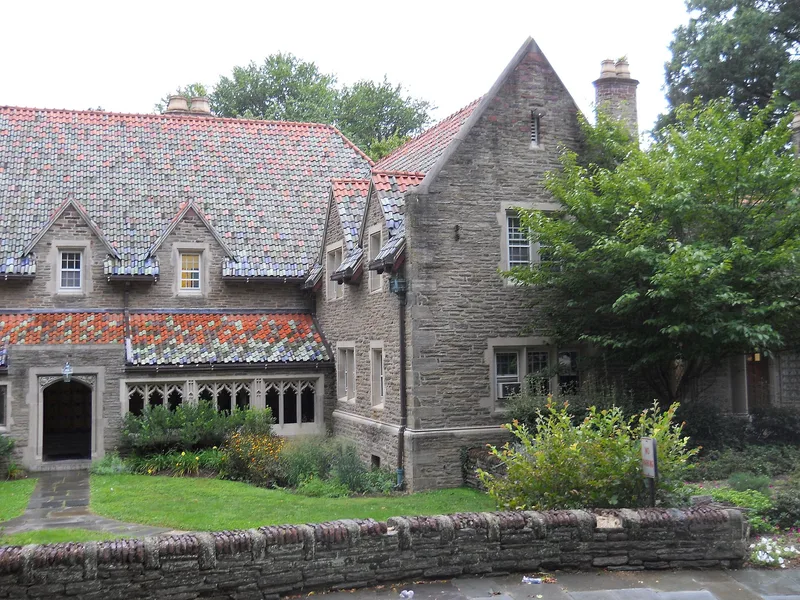
Nine low, tile-roofed stone buildings in the Tudor Revival style make up this campus of nearly one hundred acres in Flourtown, Pennsylvania. Built between 1917 and 1932, the cottages were designed mainly by Albert W. Kelsey, with later units by W. Pope Barney and Roy Banwell. Robert N. Carson left funds and land from his Erdenheim Stock Farm in 1907 for a home for orphaned girls, and the campus was planned to resemble an English village. Kelsey's cottages use Chestnut Hill stone, Enfield Pottery tiles and Ludovici roof tiles, with carved vergeboards and sculpture meant to stir children's imaginations. Under Elsa Ueland, who led the institution from 1917 to 1960, Carson became a model of progressive education and a laboratory school for education and social work programs. The district is regarded as an intact example of architecture joined to a social mission.
Machine-generated summary. This summary was generated by a language model from the official nomination document and has not been reviewed line by line by an editor. It may contain errors. Check the source document before relying on any detail. Source: nomination document (PDF) · catalog entry. Generated October 2026 (model claude-haiku-5-5, prompt v1.1-2026-10-29).
| Period of significance | 1907-1940 |
|---|---|
| Styles | Tudor Revival; Arts and Crafts |
| Areas of significance | Education, Architecture, Social History |
| Acreage | 90 |
| Boundary source | NPS cultural-resource GIS polygon |
| Full listing page | Carson College for Orphan Girls (property record) |
What listing means for this property
This is a historic district. Buildings within its boundary are either contributing (they add to the district's significance) or non-contributing. Owners of contributing income-producing buildings can claim the 20% federal rehabilitation tax credit; homeowners should look at state credits. National Register districts impose no design review by themselves; a local historic district ordinance, if one exists, does (the difference explained).
General information, not legal or tax advice. Rules change; confirm with your State Historic Preservation Office or a qualified adviser.