Biery's Port Historic District

Why it's listed
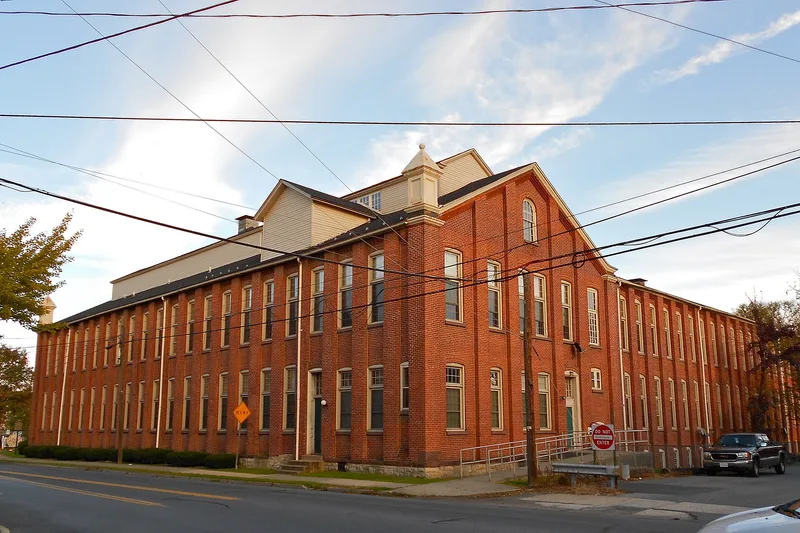
Biery's Port is a dense cluster of mid to late nineteenth century houses, shops and industrial buildings in the southern quarter of Catasauqua, on a slope running down to Catasauqua Creek. Its oldest houses are stone Federal-style dwellings built by Frederick Biery between 1801 and 1825 along Race Street. The district began with a grist mill erected by David Desher about 1852 at the confluence of the creek and the Lehigh River, which Biery later acquired in 1801. After the Lehigh Canal was built through the settlement around 1830, Biery added a tavern and a home near a chain bridge across the Lehigh, and the place took the name Biery's Port. The district became the commercial heart of the town as the anthracite iron industry developed nearby in the 1840s and 1850s. Most buildings are two to two-and-one-half stories, brick or wood frame, and retain much of their nineteenth-century character.
Machine-generated summary. This summary was generated by a language model from the official nomination document and has not been reviewed line by line by an editor. It may contain errors. Check the source document before relying on any detail. Source: nomination document (PDF) · catalog entry. Generated October 2026 (model claude-haiku-5-5, prompt v1.1-2026-10-29).
| Styles | Federal; Italianate; Second Empire |
|---|---|
| Areas of significance | Industry, Commerce, Exploration/Settlement |
| Acreage | 21 |
| Boundary source | NPS cultural-resource GIS polygon |
| Full listing page | Biery's Port Historic District (property record) |
What listing means for this property
This is a historic district. Buildings within its boundary are either contributing (they add to the district's significance) or non-contributing. Owners of contributing income-producing buildings can claim the 20% federal rehabilitation tax credit; homeowners should look at state credits. National Register districts impose no design review by themselves; a local historic district ordinance, if one exists, does (the difference explained).
General information, not legal or tax advice. Rules change; confirm with your State Historic Preservation Office or a qualified adviser.