Bedford Historic District

Why it's listed
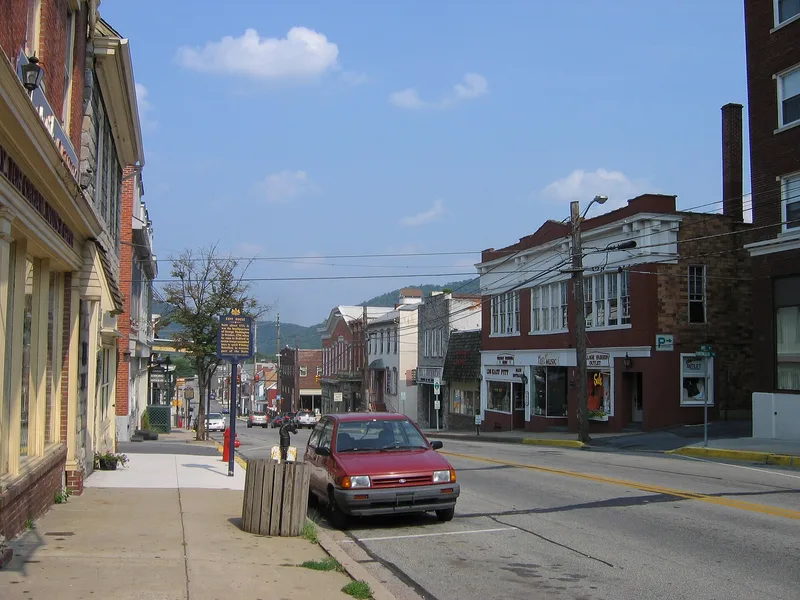
Bedford Borough sits in the Allegheny Mountains on the Raystown Branch of the Juniata River, where a settlement founded in 1750 grew up around Fort Bedford and the east-west road later known as Forbes Road. The district's buildings span from the eighteenth century to 1930 and include Colonial, Federal, Greek Revival, Italianate, Second Empire, Victorian, Beaux Arts and Art Deco examples. Its commercial core lies along Pitt Street, and its central park, the Squares, is surrounded by the county courthouse, churches and the Post Office. The district is significant for its role in frontier military events, including the French and Indian War and the Whiskey Rebellion, when President Washington headquartered in the Espy House. It also reflects the town's growth as a stop on the Pennsylvania Road and the Lincoln Highway, and as a center of inns, hotels and resorts. Architecturally, it is valued for its range of styles and for work by local architects, notably Solomon Filler.
Machine-generated summary. This summary was generated by a language model from the official nomination document and has not been reviewed line by line by an editor. It may contain errors. Check the source document before relying on any detail. Source: nomination document (PDF) · catalog entry. Generated October 2026 (model claude-haiku-5-5, prompt v1.1-2026-10-29).
| Period of significance | 1750-1930 |
|---|---|
| Styles | Colonial, Federal, Greek Revival, Georgian, Italianate, Second Empire, Second Renaissance Revival, Victorian, Beaux Arts, Art-Deco, Bungaloid and commercial styles |
| Areas of significance | Commerce, Military, Transportation, Architecture |
| Acreage | 177 |
| Boundary source | NPS cultural-resource GIS polygon |
| Full listing page | Bedford Historic District (property record) |
What listing means for this property
This is a historic district. Buildings within its boundary are either contributing (they add to the district's significance) or non-contributing. Owners of contributing income-producing buildings can claim the 20% federal rehabilitation tax credit; homeowners should look at state credits. National Register districts impose no design review by themselves; a local historic district ordinance, if one exists, does (the difference explained).
General information, not legal or tax advice. Rules change; confirm with your State Historic Preservation Office or a qualified adviser.