Bear Creek Village Historic District

Why it's listed
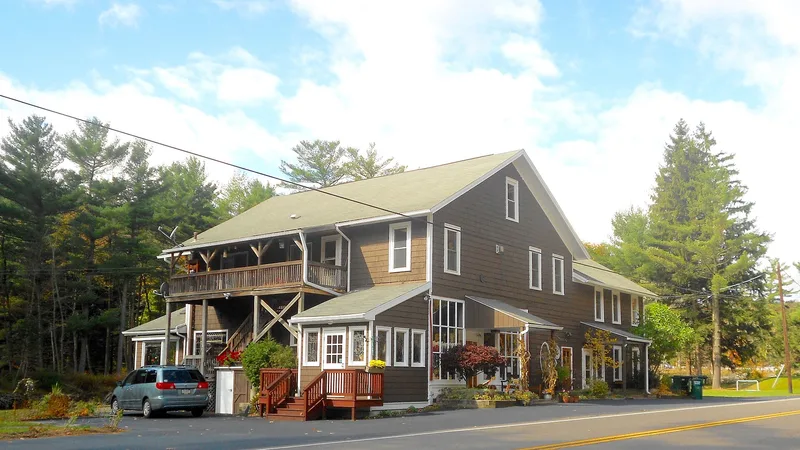
Bear Creek Village is a cluster of houses, workers' cottages, churches, a dam and lake, and industrial remains in a narrow valley in Luzerne County, Pennsylvania. Its development grew out of the lumber and ice businesses of Albert Lewis, who began building his mansion in 1895. After a fire in 1922, the house was rebuilt in 1922 and 1923 to designs by Wilkes-Barre architects Innes and Levy in the Tudor Revival style. Grace Chapel, completed in 1884, is a shingled Queen Anne building with a T-shaped plan, and the Lewis family cemetery holds monuments designed by Tiffany Studios. The timber-crib dam created Bear Creek Lake, which anchored a company town and later a summer colony along Bear Creek Boulevard. Workers' housing includes early company boarding houses and later houses modeled on Pennsylvania miners' houses. The district is important for documenting regional ice harvesting, lumbering, and the shift from company town to resort and suburban community.
Machine-generated summary. This summary was generated by a language model from the official nomination document and has not been reviewed line by line by an editor. It may contain errors. Check the source document before relying on any detail. Source: nomination document (PDF) · catalog entry. Generated October 2026 (model claude-haiku-5-5, prompt v1.1-2026-10-29).
| Period of significance | ca.1880-1949 |
|---|---|
| Styles | Eastlake, Colonial Revival, Bungalow, Queen Anne, English Colonial, Tudor Revival, Craftsman, Art Deco, Moderne, Western Stick, Industrial, Camp, Cottage, Workers' Home |
| Areas of significance | Architecture, Entertainment/Recreation, Industry |
| Acreage | 222 |
| Boundary source | NPS cultural-resource GIS polygon |
| Full listing page | Bear Creek Village Historic District (property record) |
What listing means for this property
This is a historic district. Buildings within its boundary are either contributing (they add to the district's significance) or non-contributing. Owners of contributing income-producing buildings can claim the 20% federal rehabilitation tax credit; homeowners should look at state credits. National Register districts impose no design review by themselves; a local historic district ordinance, if one exists, does (the difference explained).
General information, not legal or tax advice. Rules change; confirm with your State Historic Preservation Office or a qualified adviser.