Aaronsburg Historic District

Why it's listed
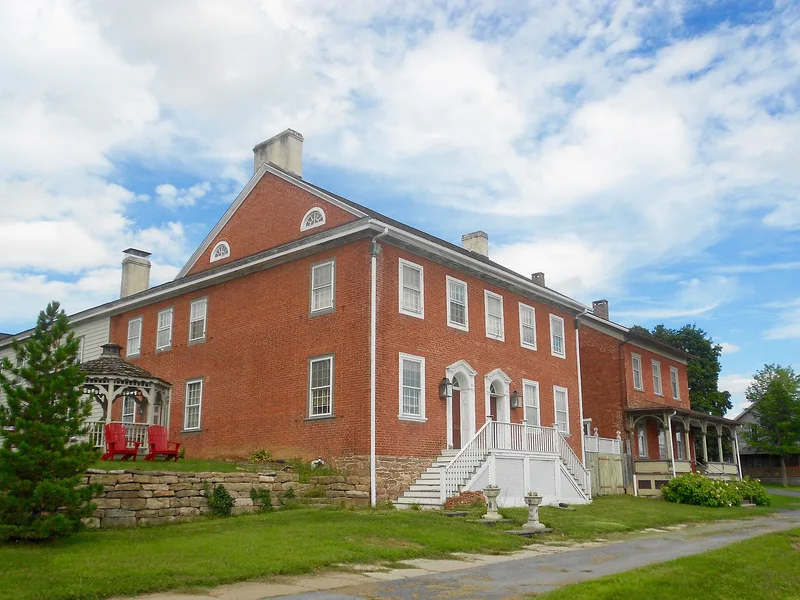
Aaronsburg is a rural village in Centre County, Pennsylvania, laid out in 1786 by Aaron Levy on a tract he bought from John Weitzel of Sunbury. The town contains about 322 buildings, of which 114 principal structures contribute to its historic character, with barns still standing alongside many houses. Its houses follow several recurring types, including the two-deep sidehall house, often built of log with a rear ell, and the English I house with a center hall plan. Many are white clapboard and built in the vernacular Georgian manner, with later Victorian porches and brackets added in the late 19th century. Levy was a land speculator who worked as an agent for Robert Morris and James Wilson, and the town reflects the westward land boom that followed the Revolution. After the mid-19th century the village shifted from a commercial post town to a residential settlement, which left its layout and buildings largely intact. Newer mobile home development on open ground at the edges is seen as a threat to that integrity.
Machine-generated summary. This summary was generated by a language model from the official nomination document and has not been reviewed line by line by an editor. It may contain errors. Check the source document before relying on any detail. Source: nomination document (PDF) · catalog entry. Generated October 2026 (model claude-haiku-5-5, prompt v1.1-2026-10-29).
| Period of significance | 1786-1899 |
|---|---|
| Styles | Vernacular Georgian |
| Areas of significance | Community Planning and Development, Exploration/Settlement, Architecture |
| Acreage | 99.7 |
| Boundary source | NPS cultural-resource GIS polygon |
| Full listing page | Aaronsburg Historic District (property record) |
What listing means for this property
This is a historic district. Buildings within its boundary are either contributing (they add to the district's significance) or non-contributing. Owners of contributing income-producing buildings can claim the 20% federal rehabilitation tax credit; homeowners should look at state credits. National Register districts impose no design review by themselves; a local historic district ordinance, if one exists, does (the difference explained).
General information, not legal or tax advice. Rules change; confirm with your State Historic Preservation Office or a qualified adviser.