Western Female Seminary

Why it's listed
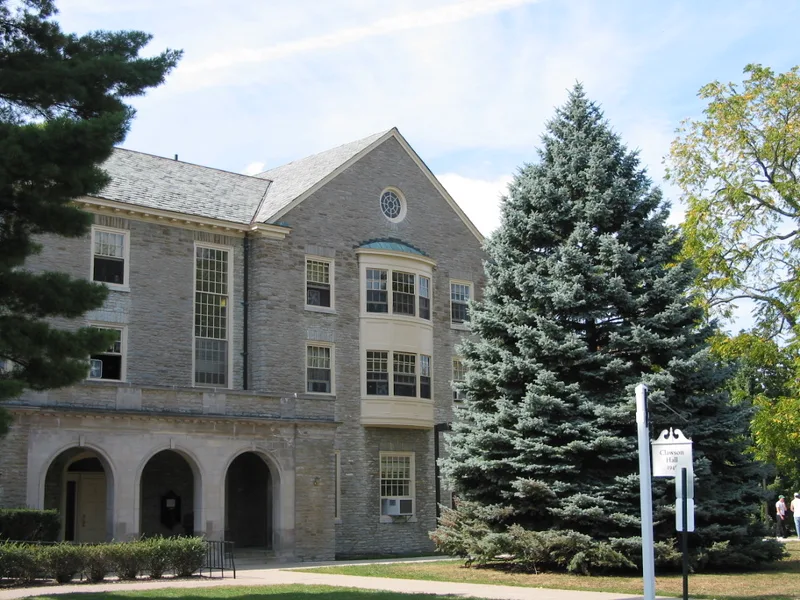
Western Female Seminary, later Western College for Women, occupies a wooded 145-acre campus on the eastern edge of Oxford, Ohio, beside Miami University. Founded in 1853 under the leadership of the Reverend Daniel Tenney, it became the first of five daughter seminaries modeled on Mt. Holyoke and grew into a leading Midwestern women's college. Its buildings span from Peabody Hall, rebuilt in 1871 using walls of an earlier structure, through McKee Hall, Kumler Chapel (1918, designed by Thomas Hastings), Mary Lyons Hall and Presser Hall, with later background buildings that echo the stone construction. Local fieldstone and rounded cannonball stone bridges, a gazebo and an outdoor theater, supervised by mason Cephas Burns, mark the rolling landscape. Alumnae Hall, a Romanesque library and classroom building, was demolished in 1977. The college closed in 1974 and the campus passed to Miami University. The district was recognized for the cohesive architectural setting created by its buildings and grounds.
Machine-generated summary. This summary was generated by a language model from the official nomination document and has not been reviewed line by line by an editor. It may contain errors. Check the source document before relying on any detail. Source: nomination document (PDF) · catalog entry. Generated October 2026 (model claude-sonnet-5-5, prompt v1.0-2026-10-29).
| Period of significance | 1800-1899, 1900- |
|---|---|
| Styles | Varied; Transitional, Romanesque, Italianate, Classical, Gothic, Dutch Colonial and Jacobethan influences |
| Areas of significance | Education, Architecture |
| Acreage | 107 |
| Boundary source | NPS cultural-resource GIS polygon |
| Full listing page | Western Female Seminary (property record) |
What listing means for this property
This is a historic district. Buildings within its boundary are either contributing (they add to the district's significance) or non-contributing. Owners of contributing income-producing buildings can claim the 20% federal rehabilitation tax credit; homeowners should look at state credits. National Register districts impose no design review by themselves; a local historic district ordinance, if one exists, does (the difference explained).
General information, not legal or tax advice. Rules change; confirm with your State Historic Preservation Office or a qualified adviser.