West Fourth Street Historic District (Boundary Increase)

The National Park Service has not published a boundary polygon for this district; the map shows the listed properties inside it and the district's reference point.
Why it's listed
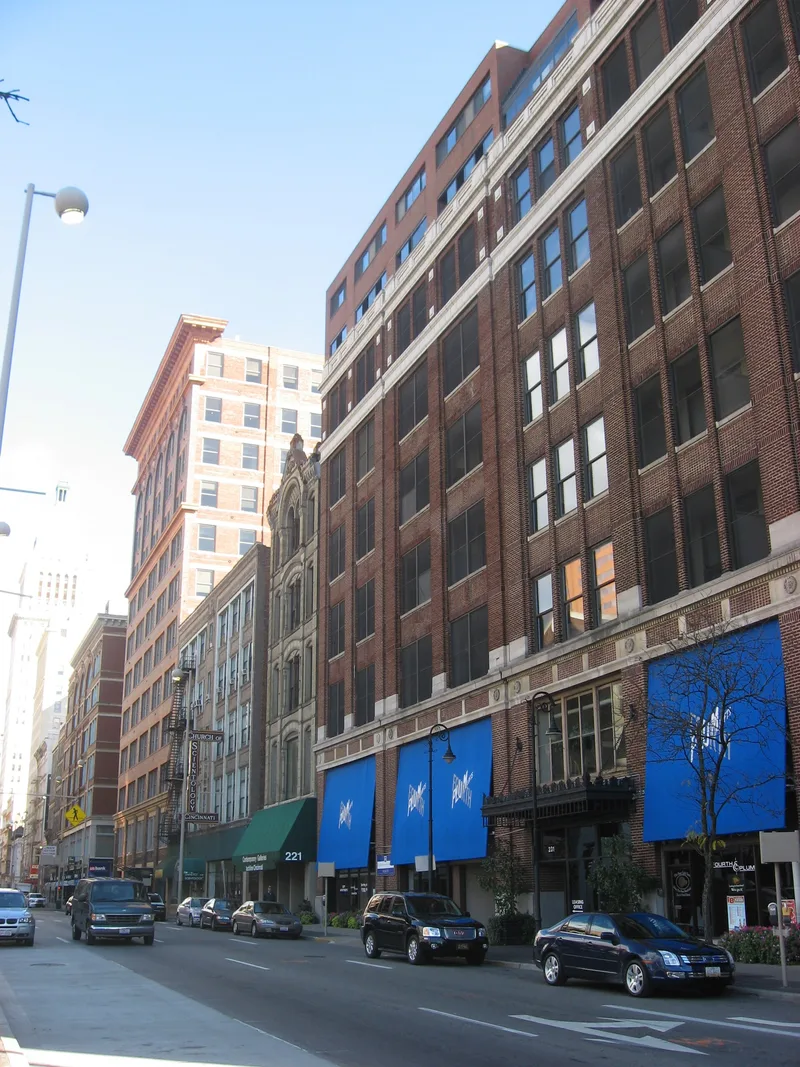
This addition to the West Fourth Street Historic District in downtown Cincinnati moves the boundary one block east to Vine Street. It takes in a group of commercial buildings along West Fourth, built from 1856 to 1916, along with a 1913 office tower. Facades of brick, cut stone, terra cotta and art tile show Renaissance Revival, Commercial Queen Anne, Tudor Revival and Beaux-Arts Classical styles. Highlights include the Union Central Life Insurance Building, designed by Cass Gilbert and the city's second-tallest skyscraper at 495 feet. Also included are the Shillito/McAlpin's building, a rare mid-19th-century department store, and the Woodruff/Gidding Building, whose 1907 storefront of Rookwood tile was restored in 2003. Fourth Street has long been regarded as the heart of downtown, and these buildings preserve its dense, pedestrian-scaled streetwall. The addition was proposed to give a more complete account of the street's architecture and its role as the city's premier shopping and financial district.
Machine-generated summary. This summary was generated by a language model from the official nomination document and has not been reviewed line by line by an editor. It may contain errors. Check the source document before relying on any detail. Source: nomination document (PDF) · catalog entry. Generated October 2026 (model claude-sonnet-5-5, prompt v1.0-2026-10-29).
| Period of significance | 1856-1930 |
|---|---|
| Styles | Late Victorian: Renaissance; Late Victorian: Eclectic; Late Victorian: Queen Anne; Tudor Revival; Beaux Arts |
| Areas of significance | Architecture |
| Acreage | 2 |
| Boundary source | not published |
| Full listing page | West Fourth Street Historic District (Boundary Increase) (property record) |
What listing means for this property
This is a historic district. Buildings within its boundary are either contributing (they add to the district's significance) or non-contributing. Owners of contributing income-producing buildings can claim the 20% federal rehabilitation tax credit; homeowners should look at state credits. National Register districts impose no design review by themselves; a local historic district ordinance, if one exists, does (the difference explained).
General information, not legal or tax advice. Rules change; confirm with your State Historic Preservation Office or a qualified adviser.