Village of Mariemont

Why it's listed
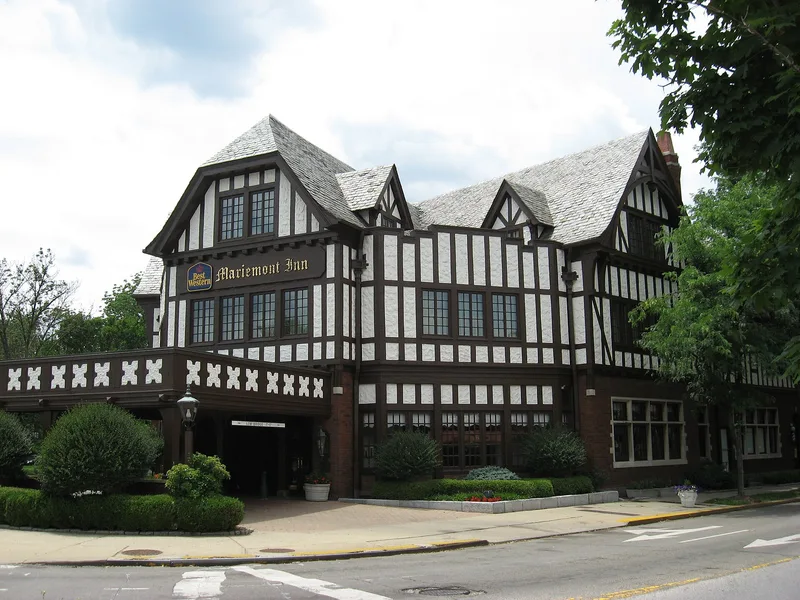
Mariemont is a planned village of roughly 650 acres ten miles east of downtown Cincinnati, laid out by town planner John Nolen and associate Philip Foster between 1920 and 1921. Funded by Cincinnati philanthropist Mary Emery and guided by her advisor Charles Livingood, it was meant to ease the housing shortage after World War I and to serve as a national model for working-class neighborhoods. Wooster Pike forms its spine, while radiating avenues, curving streets, a central square with a fountain, and extensive parks give the plan both formal and informal elements. Housing includes attached groups, apartments, duplexes and detached homes, mostly in Tudor Revival and Colonial Revival styles, designed by architects from New York, Boston, Philadelphia and Cincinnati. The district has 1,014 contributing resources dating from 1920 to 1962. It was listed because it is the most complete and intact example of Nolen's work and a premier American garden-city suburb, with street layouts unchanged from the 1921 plan.
Machine-generated summary. This summary was generated by a language model from the official nomination document and has not been reviewed line by line by an editor. It may contain errors. Check the source document before relying on any detail. Source: nomination document (PDF) · catalog entry. Generated October 2026 (model claude-sonnet-5-5, prompt v1.0-2026-10-29).
| Period of significance | 1920-1962 |
|---|---|
| Styles | Tudor Revival and Colonial Revival predominantly; also Federal, Italian Renaissance Revival, Bungalow/Craftsman and Art Deco |
| Areas of significance | Community Planning and Development, Architecture, Landscape Architecture |
| Acreage | 525 |
| Boundary source | NPS cultural-resource GIS polygon |
| Full listing page | Village of Mariemont (property record) |
What listing means for this property
This is a historic district. Buildings within its boundary are either contributing (they add to the district's significance) or non-contributing. Owners of contributing income-producing buildings can claim the 20% federal rehabilitation tax credit; homeowners should look at state credits. National Register districts impose no design review by themselves; a local historic district ordinance, if one exists, does (the difference explained).
General information, not legal or tax advice. Rules change; confirm with your State Historic Preservation Office or a qualified adviser.