Upper Arlington Historic District

Why it's listed
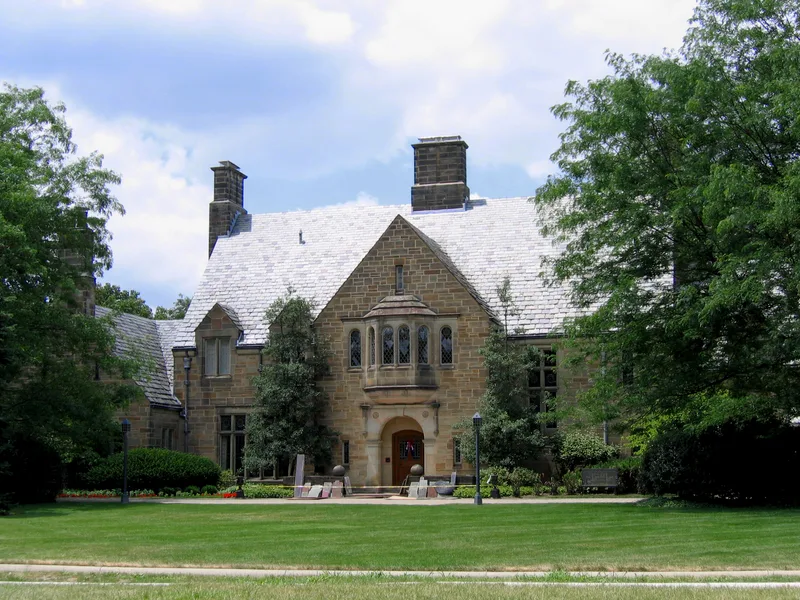
Upper Arlington is a planned residential community northwest of downtown Columbus, Ohio. Brothers King and Ben Thompson bought roughly a thousand acres from James T. Miller in December 1913 and began developing it around 1915. The district covers 536 acres and about 1121 buildings, nearly all houses, with a small number of apartment buildings, shops and civic structures. Most were built between 1915 and 1935 in Revival styles: Georgian and Dutch Colonial, English Tudor and Cotswold, French and Spanish. Local limestone was used in many buildings. Notable architects include Howard Dwight Smith, who designed Jones Middle School and the Boiler House, and Hyp J. Dauben, who designed the Georgian Revival Municipal Building. The Arlington Avenue shops share a unified Tudor Revival look. The homes of both Thompson brothers face Miller Park. The district's boundaries follow the original land purchase and the areas platted between 1915 and 1927, and its consistent scale, materials and setbacks show the original plan.
Machine-generated summary. This summary was generated by a language model from the official nomination document and has not been reviewed line by line by an editor. It may contain errors. Check the source document before relying on any detail. Source: nomination document (PDF) · catalog entry. Generated October 2026 (model claude-sonnet-5-5, prompt v1.0-2026-10-29).
| Styles | Twentieth Century Revival styles, primarily American Colonial Revival and English Revival, with French Revival, Spanish Colonial Revival and others |
|---|---|
| Areas of significance | Community Planning and Development, Landscape Architecture, Architecture |
| Acreage | 536 |
| Boundary source | NPS cultural-resource GIS polygon |
| Full listing page | Upper Arlington Historic District (property record) |
What listing means for this property
This is a historic district. Buildings within its boundary are either contributing (they add to the district's significance) or non-contributing. Owners of contributing income-producing buildings can claim the 20% federal rehabilitation tax credit; homeowners should look at state credits. National Register districts impose no design review by themselves; a local historic district ordinance, if one exists, does (the difference explained).
General information, not legal or tax advice. Rules change; confirm with your State Historic Preservation Office or a qualified adviser.