Sidney Walnut Avenue Historic District

The National Park Service has not published a boundary polygon for this district; the map shows the listed properties inside it and the district's reference point.
Why it's listed
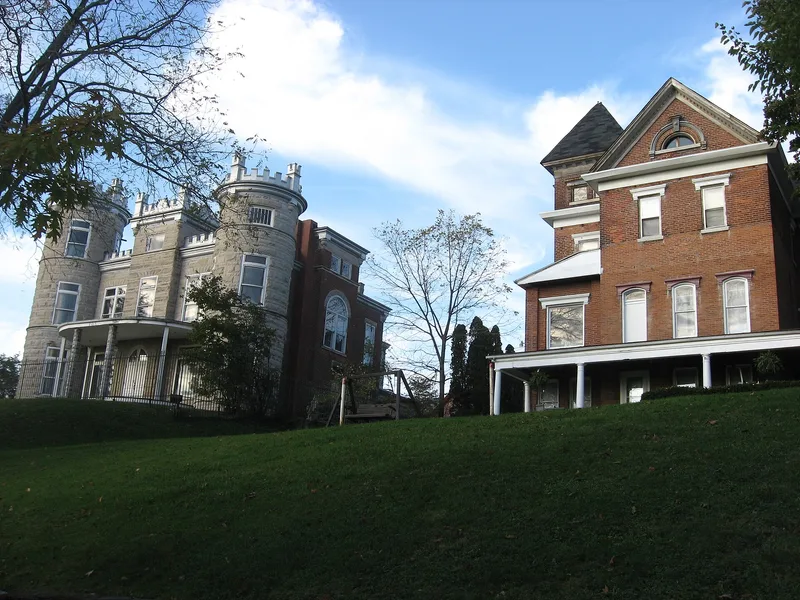
Fifteen houses crowd a small hill northwest of downtown Sidney, Ohio, along Walnut Avenue and North Street. Most were built or remodeled between 1890 and 1910, when Sidney grew from a rural county seat and market center into a banking, commercial and industrial city. The earliest is a Southern Colonial house from 1847 built by Thomas Stephenson, who arrived in Shelby County in 1825. Later houses range from Greek Revival and Italianate to elaborate Queen Anne mansions, a Four-Square, a Dutch Colonial remodel and a 1913 bungalow. The best known is Bonneyconnellan Castle, built in 1889 by school furniture manufacturer John Loughlin as a replica of a Scottish castle, with three battlemented stone towers. Other owners included store, steel scraper, churn and grain mill proprietors, and members of the Wagner family, who held manufacturing, brewing and banking interests. The district is recognized for its architecture and for showing how the hilltop became the town's elite residential street.
Machine-generated summary. This summary was generated by a language model from the official nomination document and has not been reviewed line by line by an editor. It may contain errors. Check the source document before relying on any detail. Source: nomination document (PDF) · catalog entry. Generated October 2026 (model claude-sonnet-5-5, prompt v1.0-2026-10-29).
| Period of significance | 1847-1913 |
|---|---|
| Styles | Queen Anne, Italianate, Greek Revival, Southern Colonial, American Four-Square, Dutch Colonial, Bungalow |
| Areas of significance | Industry, Commerce, Architecture |
| Acreage | 8.6 |
| Boundary source | not published |
| Full listing page | Sidney Walnut Avenue Historic District (property record) |
What listing means for this property
This is a historic district. Buildings within its boundary are either contributing (they add to the district's significance) or non-contributing. Owners of contributing income-producing buildings can claim the 20% federal rehabilitation tax credit; homeowners should look at state credits. National Register districts impose no design review by themselves; a local historic district ordinance, if one exists, does (the difference explained).
General information, not legal or tax advice. Rules change; confirm with your State Historic Preservation Office or a qualified adviser.