Piqua-Caldwell Historic District

Why it's listed
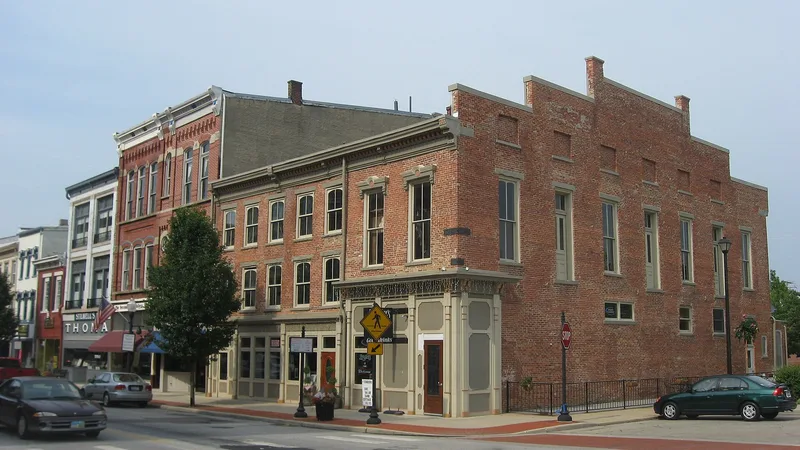
This 23-block district northeast of Piqua's public square preserves the city's historic center. Bounded by the Great Miami River on the north and the Miami-Erie Canal on the east, it includes four blocks of commercial buildings along North Main Street, nine churches, one industrial complex and a large enclave of residences on Wayne, Downing and Caldwell Streets. Housing ranges from the 1822 Henry Kitchen house, the oldest building in the district, to the 1921 Spiker mansion. Wayne Street holds some of the city's purest Greek Revival and Federal examples, while Downing and Caldwell Streets display more elaborate Victorian and later designs built as industry brought wealth between 1870 and 1910. Main Street shops once backed onto the canal and many still have entrances on both sides. The district takes its name from early landowner Matthew Caldwell. Its importance rests on Piqua's role as a river port, quarrying center, land office town, canal city and later industrial community.
Machine-generated summary. This summary was generated by a language model from the official nomination document and has not been reviewed line by line by an editor. It may contain errors. Check the source document before relying on any detail. Source: nomination document (PDF) · catalog entry. Generated October 2026 (model claude-sonnet-5-5, prompt v1.0-2026-10-29).
| Styles | Federal, Greek Revival, Italianate, Queen Anne, Colonial/Georgian Revival, Victorian commercial, and other mixed styles |
|---|---|
| Areas of significance | Industry, Architecture |
| Acreage | 102 |
| Boundary source | NPS cultural-resource GIS polygon |
| Full listing page | Piqua-Caldwell Historic District (property record) |
What listing means for this property
This is a historic district. Buildings within its boundary are either contributing (they add to the district's significance) or non-contributing. Owners of contributing income-producing buildings can claim the 20% federal rehabilitation tax credit; homeowners should look at state credits. National Register districts impose no design review by themselves; a local historic district ordinance, if one exists, does (the difference explained).
General information, not legal or tax advice. Rules change; confirm with your State Historic Preservation Office or a qualified adviser.