Old Beechwold Historic District

Why it's listed
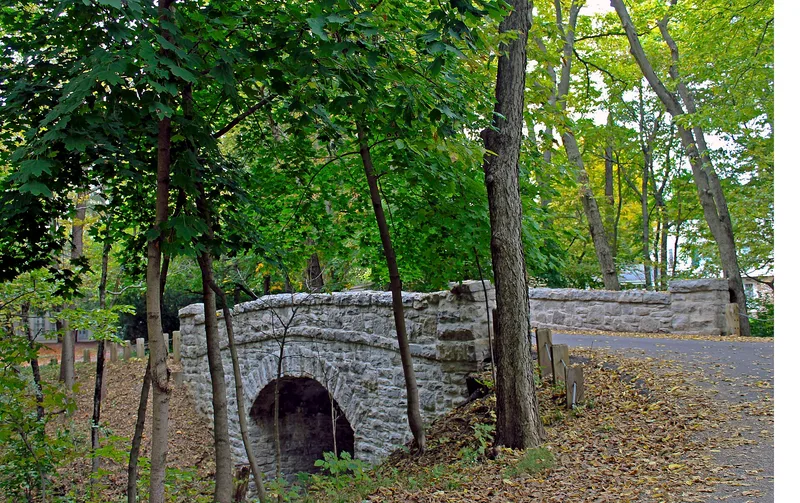
Old Beechwold is a planned suburban neighborhood of roughly 75 wooded acres between North High Street and the Olentangy River in northern Columbus. Narrow curving streets without curbs or sidewalks wind past stone, brick and stucco houses, a small stone bridge and a ravine kept as parkland. The land was once a zoo-park venture, then the estate of Joseph A. Jeffrey, founder of the Jeffrey Manufacturing Company, who built the first houses in 1906. In 1914 it passed to developer Charles H. Johnson, who hired landscape architect William Pitkin, Jr. to lay out the plat in 1915. The houses reflect English Cottage, Tudor Revival, Georgian and Dutch Colonial styles, designed by several local firms. The district was listed for its architecture, landscape architecture and community planning. Its remote location, more than eight miles from downtown, became practical through streetcar service and the growing use of automobiles. The district counts 155 contributing and 34 non-contributing resources.
Machine-generated summary. This summary was generated by a language model from the official nomination document and has not been reviewed line by line by an editor. It may contain errors. Check the source document before relying on any detail. Source: nomination document (PDF) · catalog entry. Generated October 2026 (model claude-sonnet-5-5, prompt v1.0-2026-10-29).
| Period of significance | 1906-1942 |
|---|---|
| Styles | Early 20th century revival styles: English Cottage, Tudor Revival, Georgian and Dutch Colonial, with some Craftsman and Spanish influence |
| Areas of significance | Community Planning and Development, Landscape Architecture, Architecture |
| Acreage | 75 |
| Boundary source | NPS cultural-resource GIS polygon |
| Full listing page | Old Beechwold Historic District (property record) |
What listing means for this property
This is a historic district. Buildings within its boundary are either contributing (they add to the district's significance) or non-contributing. Owners of contributing income-producing buildings can claim the 20% federal rehabilitation tax credit; homeowners should look at state credits. National Register districts impose no design review by themselves; a local historic district ordinance, if one exists, does (the difference explained).
General information, not legal or tax advice. Rules change; confirm with your State Historic Preservation Office or a qualified adviser.