Nela Park

Why it's listed
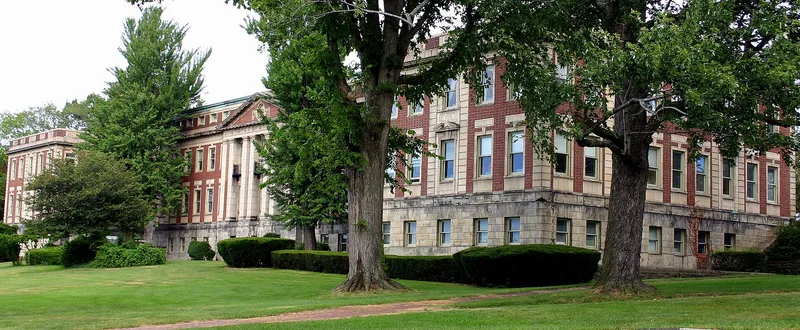
Nela Park is an office and laboratory campus of about 90 acres at 1901 Noble Road in East Cleveland, Ohio. Franklin Terry and Burton Tremaine of the National Electric Lamp Company conceived it in 1910, and the site was a plateau 234 feet above Lake Erie with woods and a ravine. The nomination makes a strong claim that it was the first planned industrial park in the nation. Architect Frank E. Wallis of New York designed all buildings begun before 1921. Twenty major buildings, mostly two or three stories of red brick with terra-cotta trim, follow a Georgian Revival style. The earliest ones are arranged around a central Quadrangle on two axes. Underground tunnels connect the buildings, and the roadways are tree-lined and landscaped under plans made from the start. The form describes the design as a representation of the early twentieth century academic ideal. The original architectural scheme and landscape planning remain virtually intact, and the plant still operates.
Machine-generated summary. This summary was generated by a language model from the official nomination document and has not been reviewed line by line by an editor. It may contain errors. Check the source document before relying on any detail. Source: nomination document (PDF) · catalog entry. Generated October 2026 (model claude-sonnet-5-5, prompt v1.0-2026-10-29).
| Period of significance | 1911-1921 |
|---|---|
| Styles | Georgian Revival |
| Areas of significance | Industry, Landscape Architecture, Architecture |
| Acreage | 90 |
| Boundary source | NPS cultural-resource GIS polygon |
| Full listing page | Nela Park (property record) |
What listing means for this property
This is a historic district. Buildings within its boundary are either contributing (they add to the district's significance) or non-contributing. Owners of contributing income-producing buildings can claim the 20% federal rehabilitation tax credit; homeowners should look at state credits. National Register districts impose no design review by themselves; a local historic district ordinance, if one exists, does (the difference explained).
General information, not legal or tax advice. Rules change; confirm with your State Historic Preservation Office or a qualified adviser.