Mariemont Historic District

Why it's listed
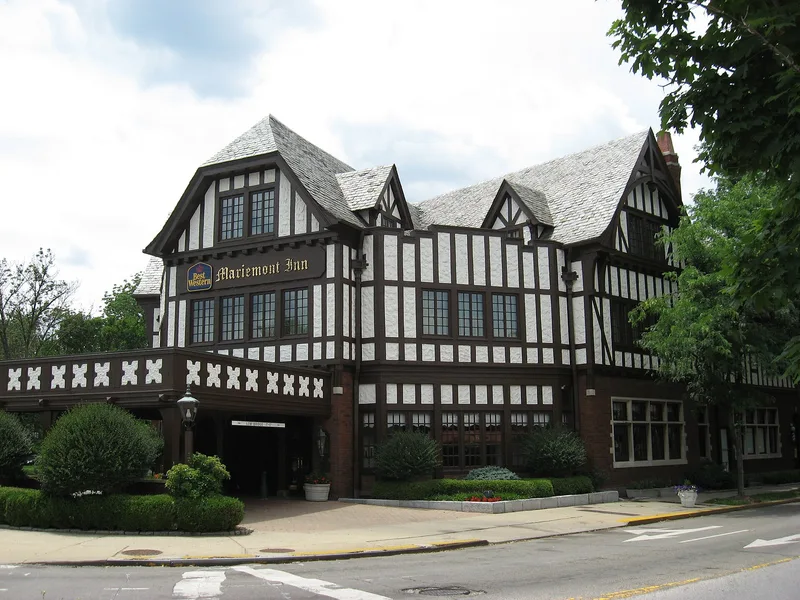
Mariemont is a planned garden city community in Hamilton County, Ohio, laid out in 1921 by planner John Nolen. Its street plan radiates from the Town Center, with curving residential streets, cul-de-sacs leading to housing clusters, and a landscaped east-west highway. The district is mainly residential but also includes commercial, industrial and recreational areas and large open spaces. Notable buildings from the 1920s and 1930s include Memorial Church, designed by Louis E. Jallade to resemble an old English parish church, and the Dale Park apartments and group houses in Colonial, Tudor and half-timber styles. Other landmarks are the Mariemont Inn, the Recreation Center, Mariemont High School, the Dogwood Park carillon tower and Miami Bluff Park. The district also contains the c. 1807 Eliphalet Ferris House, separately listed. Together these elements show how housing, civic buildings and parks were coordinated under one comprehensive plan.
Machine-generated summary. This summary was generated by a language model from the official nomination document and has not been reviewed line by line by an editor. It may contain errors. Check the source document before relying on any detail. Source: nomination document (PDF) · catalog entry. Generated October 2026 (model claude-sonnet-5-5, prompt v1.0-2026-10-29).
| Styles | Mixed, including English-Norman, Colonial, Tudor half-timber, Italianate and Greek Revival |
|---|---|
| Areas of significance | Community Planning and Development |
| Acreage | 319 |
| Boundary source | NPS cultural-resource GIS polygon |
| Full listing page | Mariemont Historic District (property record) |
What listing means for this property
This is a historic district. Buildings within its boundary are either contributing (they add to the district's significance) or non-contributing. Owners of contributing income-producing buildings can claim the 20% federal rehabilitation tax credit; homeowners should look at state credits. National Register districts impose no design review by themselves; a local historic district ordinance, if one exists, does (the difference explained).
General information, not legal or tax advice. Rules change; confirm with your State Historic Preservation Office or a qualified adviser.