Mackinaw Historic District

Why it's listed
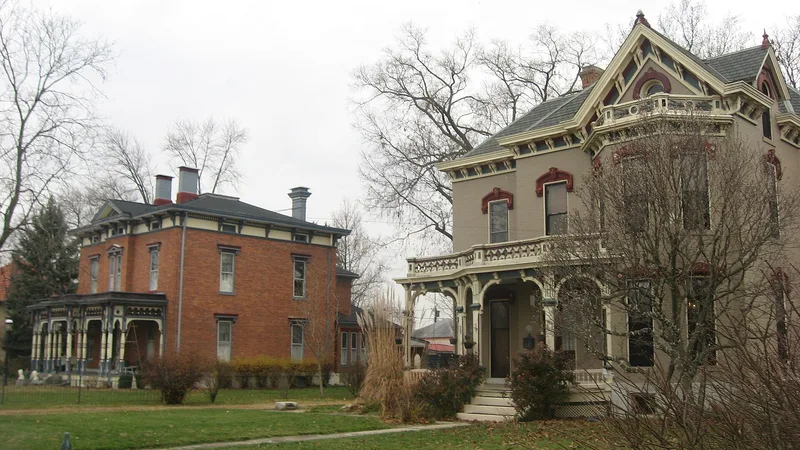
West of the Great Miami River in Franklin, Ohio, a five-block residential neighborhood holds about thirty notable houses built between 1847 and the early twentieth century. Most are frame buildings from the late 1800s, and few have been greatly altered. Styles include Queen Anne, Italianate, French Second Empire, Shingle, Stick, and Colonial Revival. The oldest survivors, the Chamberlain house of 1847 with its cast iron portico and the Anderson farmhouse of about 1860, date from the early farming settlement on the west bank. Development accelerated after a railroad reached Franklin in 1887 and Lewis G. Anderson and others platted the Mackinaw Subdivision. Many houses were built between 1887 and 1893 for prominent townspeople tied to Franklin's paper mills, grain and lumber trade, and other industries. The district is valued for its architecture and for what it shows of the town's economic growth after the Civil War.
Machine-generated summary. This summary was generated by a language model from the official nomination document and has not been reviewed line by line by an editor. It may contain errors. Check the source document before relying on any detail. Source: nomination document (PDF) · catalog entry. Generated October 2026 (model claude-sonnet-5-5, prompt v1.0-2026-10-29).
| Period of significance | 1800-1899 and 1900- (specific dates not given) |
|---|---|
| Styles | Mixed late 19th and early 20th century residential styles: Queen Anne, Italianate, French Second Empire, Shingle, Stick, Eastlake, Colonial Revival, Georgian Revival |
| Areas of significance | Industry, Community Planning and Development, Architecture |
| Acreage | 19.1 |
| Boundary source | NPS cultural-resource GIS polygon |
| Full listing page | Mackinaw Historic District (property record) |
What listing means for this property
This is a historic district. Buildings within its boundary are either contributing (they add to the district's significance) or non-contributing. Owners of contributing income-producing buildings can claim the 20% federal rehabilitation tax credit; homeowners should look at state credits. National Register districts impose no design review by themselves; a local historic district ordinance, if one exists, does (the difference explained).
General information, not legal or tax advice. Rules change; confirm with your State Historic Preservation Office or a qualified adviser.