Limbach Block Historic District

The National Park Service has not published a boundary polygon for this district; the map shows the listed properties inside it and the district's reference point.
Why it's listed
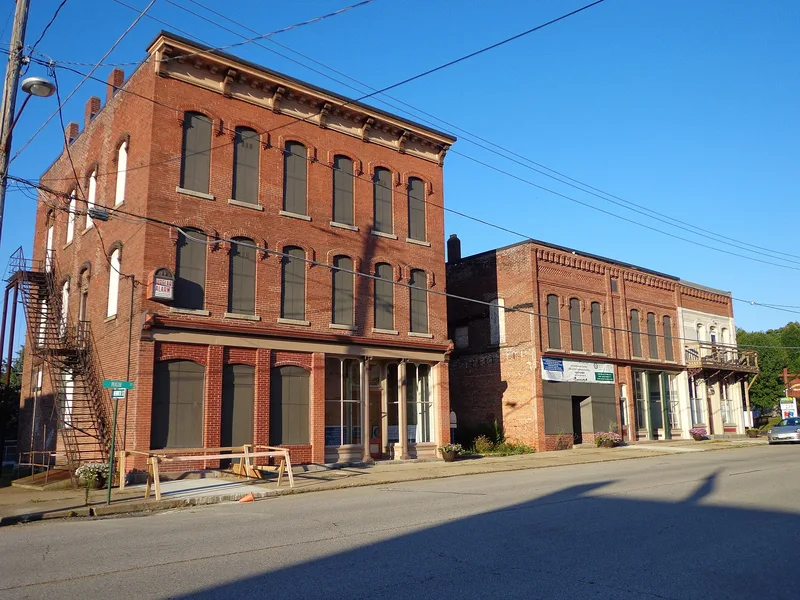
Along the north side of Main Street in Clinton, Ohio, a row of brick and frame buildings forms the Limbach Block. The oldest section, at 7843 and 7845 Main Street, was built in 1878 in the Commercial Italianate style, with retail storefronts below, apartments above and a third-floor ballroom with a parquet floor and bandstand. A two-story brick addition at 7849 and 7851 followed in 1886, using corbelled, dentiled and sawtooth brickwork associated with the Queen Anne style. Later additions, including a 1930s enclosed balcony, altered parts of the group, and two attached structures are classed as noncontributing. The block was the commercial center of the village during its railroad era, housing a bank, leather goods store, doctor's office, grocery and hardware store. After the Fire of 1909 destroyed most commercial buildings on Water Street, it became the village's main business node. Its commercial role and its surviving Italianate and Queen Anne architecture support its listing.
Machine-generated summary. This summary was generated by a language model from the official nomination document and has not been reviewed line by line by an editor. It may contain errors. Check the source document before relying on any detail. Source: nomination document (PDF) · catalog entry. Generated October 2026 (model claude-sonnet-5-5, prompt v1.0-2026-10-29).
| Period of significance | 1878-1930 |
|---|---|
| Styles | Commercial Italianate; Queen Anne |
| Areas of significance | Commerce, Architecture |
| Acreage | 0.5 |
| Boundary source | not published |
| Full listing page | Limbach Block Historic District (property record) |
What listing means for this property
This is a historic district. Buildings within its boundary are either contributing (they add to the district's significance) or non-contributing. Owners of contributing income-producing buildings can claim the 20% federal rehabilitation tax credit; homeowners should look at state credits. National Register districts impose no design review by themselves; a local historic district ordinance, if one exists, does (the difference explained).
General information, not legal or tax advice. Rules change; confirm with your State Historic Preservation Office or a qualified adviser.