Hunts Corners

Why it's listed
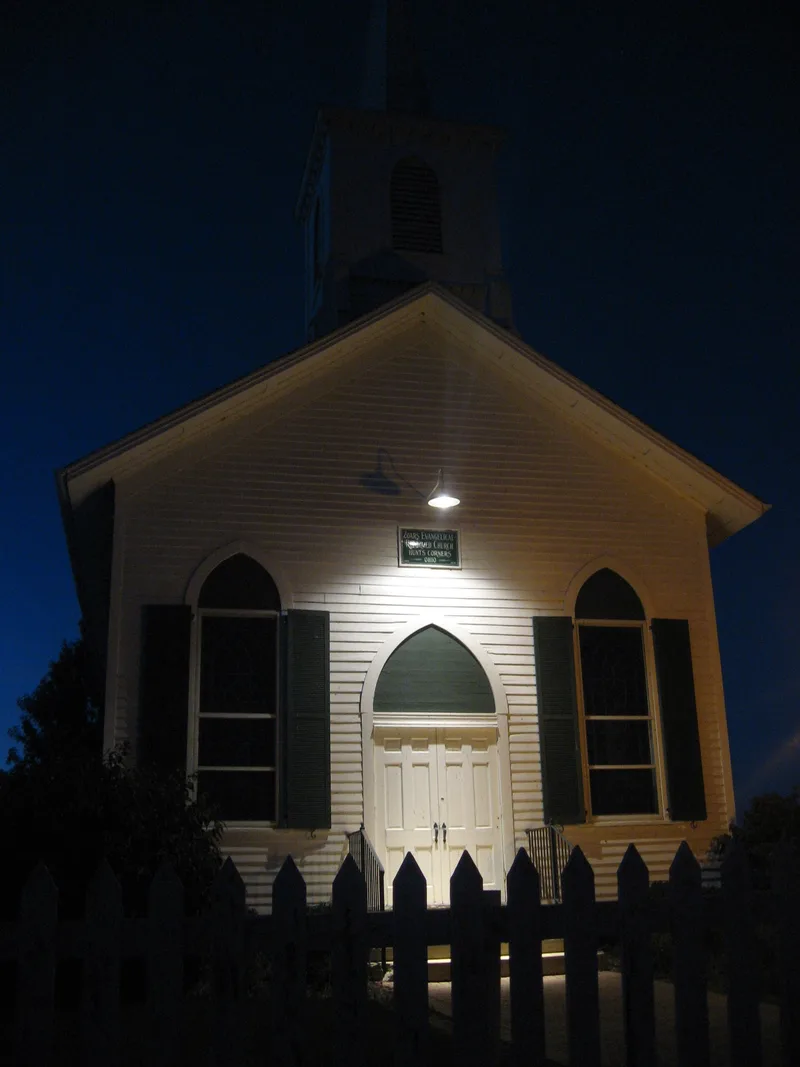
Hunts Corners is a small farming crossroads in Lyme Township, west of Monroeville in Huron County, Ohio, where Sandhill Road meets State Route 547. The 35-acre district contains 14 contributing resources, including a wood-frame church built in 1866, a brick Gothic Revival house from about 1870, a vernacular house from 1857, several barns, outbuildings and the Herner-Martin drainage ditch. Surrounding fields are still farmed. The settlement was named for Heil Hunt and grew after German families arrived in the late 1840s, among them Philip William Heymann and his relatives. The community organized a Reformed congregation and built its church in 1866 on donated land and timber. The crossroads also had a blacksmith shop, a store and a school, and a local newspaper carried a column of Hunts Corners news. The district was listed for its role in illustrating rural settlement and development in north-central Ohio, with a period of significance from 1850 to 1943.
Machine-generated summary. This summary was generated by a language model from the official nomination document and has not been reviewed line by line by an editor. It may contain errors. Check the source document before relying on any detail. Source: nomination document (PDF) · catalog entry. Generated October 2026 (model claude-sonnet-5-5, prompt v1.0-2026-10-29).
| Period of significance | 1850-1943 |
|---|---|
| Styles | Gothic Revival; late nineteenth-century vernacular |
| Areas of significance | Exploration/Settlement |
| Acreage | 17 |
| Boundary source | NPS cultural-resource GIS polygon |
| Full listing page | Hunts Corners (property record) |
What listing means for this property
This is a historic district. Buildings within its boundary are either contributing (they add to the district's significance) or non-contributing. Owners of contributing income-producing buildings can claim the 20% federal rehabilitation tax credit; homeowners should look at state credits. National Register districts impose no design review by themselves; a local historic district ordinance, if one exists, does (the difference explained).
General information, not legal or tax advice. Rules change; confirm with your State Historic Preservation Office or a qualified adviser.