Greenhills Historic District

Why it's listed
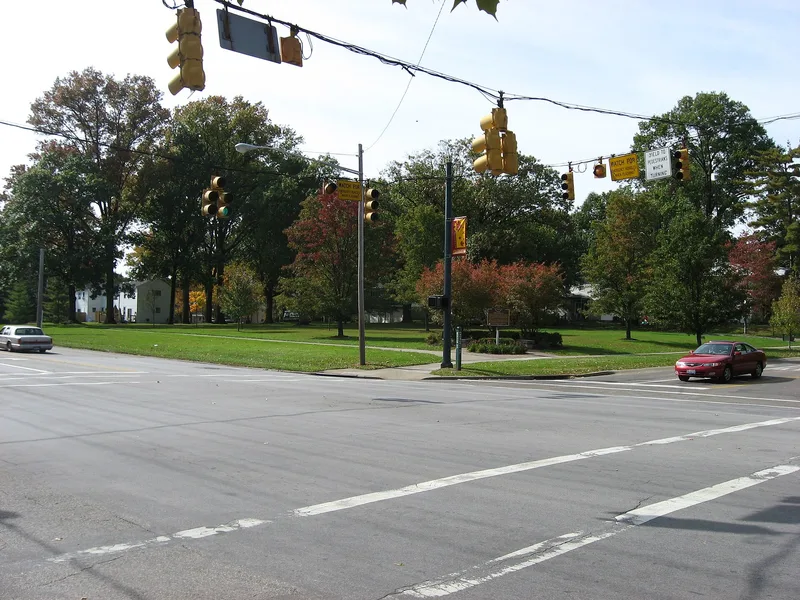
Greenhills is a planned Greenbelt town in Hamilton County, Ohio, and its historic district covers roughly 300 acres in the southwest part of the village. The district takes in the streets and buildings put up by 1938, when the federal project was completed, and holds about 800 buildings and structures, 68 of them non-contributing because they were built later. Winton Road runs north to south through the center, with curving residential streets, cul-de-sacs and courts forming superblocks that leave generous green space. Housing includes single-family homes, duplexes and row buildings of three to ten units, mostly brick, stucco or asbestos siding. Many show International Style traits such as flat roofs, smooth surfaces and simple porch supports, while some in the A and B sections show Colonial Revival touches. A commercial center, farmers' market, community building, pool complex and town commons complete the original layout. None of the 676 original residential units have been lost.
Machine-generated summary. This summary was generated by a language model from the official nomination document and has not been reviewed line by line by an editor. It may contain errors. Check the source document before relying on any detail. Source: nomination document (PDF) · catalog entry. Generated October 2026 (model claude-sonnet-5-5, prompt v1.0-2026-10-29).
| Styles | Modern Movement; International Style; Colonial Revival |
|---|---|
| Areas of significance | Community Planning and Development |
| Acreage | 300 |
| Boundary source | NPS cultural-resource GIS polygon |
| Full listing page | Greenhills Historic District (property record) |
What listing means for this property
This is a historic district. Buildings within its boundary are either contributing (they add to the district's significance) or non-contributing. Owners of contributing income-producing buildings can claim the 20% federal rehabilitation tax credit; homeowners should look at state credits. National Register districts impose no design review by themselves; a local historic district ordinance, if one exists, does (the difference explained).
General information, not legal or tax advice. Rules change; confirm with your State Historic Preservation Office or a qualified adviser.