Glencoe-Auburn Hotel and Clecoe-Auburn Place Row Houses

The National Park Service has not published a boundary polygon for this district; the map shows the listed properties inside it and the district's reference point.
Why it's listed
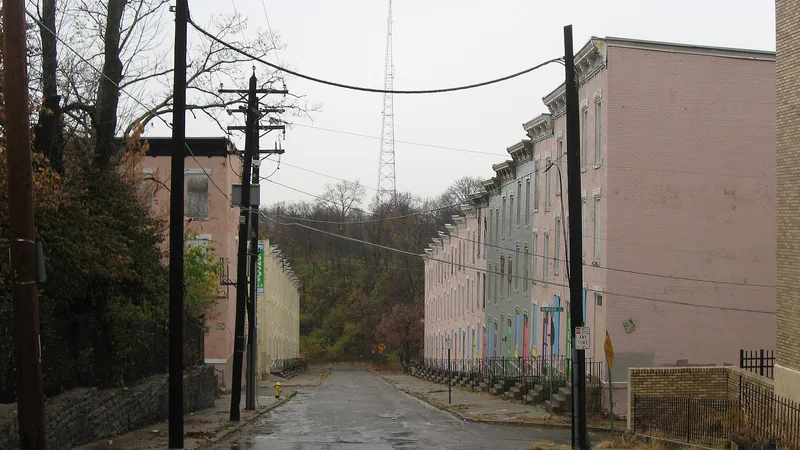
Glencoe-Auburn is a self-contained hillside neighborhood in Cincinnati's Mount Auburn area, built between 1884 and 1891. Six detached brick buildings enclose four streets and hold 54 row houses and flats. Four are Italianate row house groups with simple bracketed sheet-metal cornices and carved sandstone lintels. A fifth looks almost identical, and the sixth, a Queen Anne building with a sandstone façade and conical corner turret, began as a hotel. Builder Jethro Mitchell apparently developed the complex as rental income, and residents were mostly middle-class workers. Later it declined, earning the nickname "the Hole," and a 1964 rent strike by tenants led to its inclusion in city redevelopment. A 1970s rehabilitation won awards but altered the interiors heavily and removed some units. The complex was listed for its representation of nineteenth-century brick urban row house architecture. At nomination, the buildings were unoccupied.
Machine-generated summary. This summary was generated by a language model from the official nomination document and has not been reviewed line by line by an editor. It may contain errors. Check the source document before relying on any detail. Source: nomination document (PDF) · catalog entry. Generated October 2026 (model claude-sonnet-5-5, prompt v1.0-2026-10-29).
| Period of significance | ca. 1884 |
|---|---|
| Styles | Late Victorian / Italianate / Queen Anne |
| Areas of significance | Architecture |
| Acreage | 4 |
| Boundary source | not published |
| Full listing page | Glencoe-Auburn Hotel and Clecoe-Auburn Place Row Houses (property record) |
What listing means for this property
This is a historic district. Buildings within its boundary are either contributing (they add to the district's significance) or non-contributing. Owners of contributing income-producing buildings can claim the 20% federal rehabilitation tax credit; homeowners should look at state credits. National Register districts impose no design review by themselves; a local historic district ordinance, if one exists, does (the difference explained).
Noted as vacant in the nomination. Nomination documents can be decades old; current status may differ. If you are considering buying an empty listed property, read the due-diligence checklist.
General information, not legal or tax advice. Rules change; confirm with your State Historic Preservation Office or a qualified adviser.