Fairhill Road Village Historic District

Why it's listed
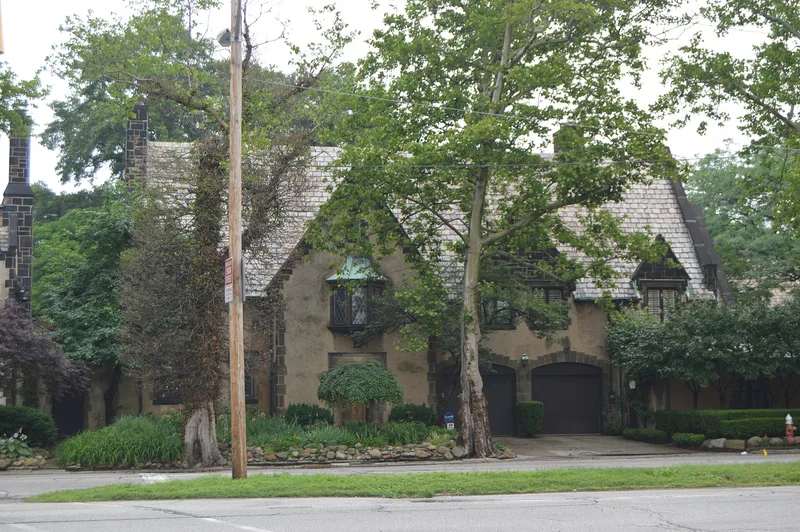
Fairhill Road Village is a group of thirteen houses along Fairhill Road, on the line between Cleveland and Cleveland Heights, designed to resemble an English hamlet. Built mostly between 1929 and 1933, the semi-detached and single-family homes use stucco and sandstone, slate roofs, diamond-paned and casement windows, varied gables and large chimneys in a Tudor Revival manner. Garages face the street, while living rooms and patios look over the wooded Ambler Park ravine. Landscape architect A. Donald Gray conceived the development with architect Antonio DiNardo, who left in 1929 and was replaced by Harold O. Fullerton. The site was a rock dump left from the Fairmount Reservoir excavation. Unlike Shaker Heights and Forest Hills, it used attached houses with shallow setbacks and kept the existing natural landscape. Residents included Gray, Fullerton and the founders of Karamu House. One house from 1971 is the only noncontributing building.
Machine-generated summary. This summary was generated by a language model from the official nomination document and has not been reviewed line by line by an editor. It may contain errors. Check the source document before relying on any detail. Source: nomination document (PDF) · catalog entry. Generated October 2026 (model claude-sonnet-5-5, prompt v1.0-2026-10-29).
| Period of significance | 1929-1933 |
|---|---|
| Styles | Late 19th & 20th Century Revival: Tudor Revival (English Cotswold style) |
| Areas of significance | Community Planning and Development, Landscape Architecture, Architecture |
| Acreage | 2 |
| Boundary source | NPS cultural-resource GIS polygon |
| Full listing page | Fairhill Road Village Historic District (property record) |
What listing means for this property
This is a historic district. Buildings within its boundary are either contributing (they add to the district's significance) or non-contributing. Owners of contributing income-producing buildings can claim the 20% federal rehabilitation tax credit; homeowners should look at state credits. National Register districts impose no design review by themselves; a local historic district ordinance, if one exists, does (the difference explained).
General information, not legal or tax advice. Rules change; confirm with your State Historic Preservation Office or a qualified adviser.